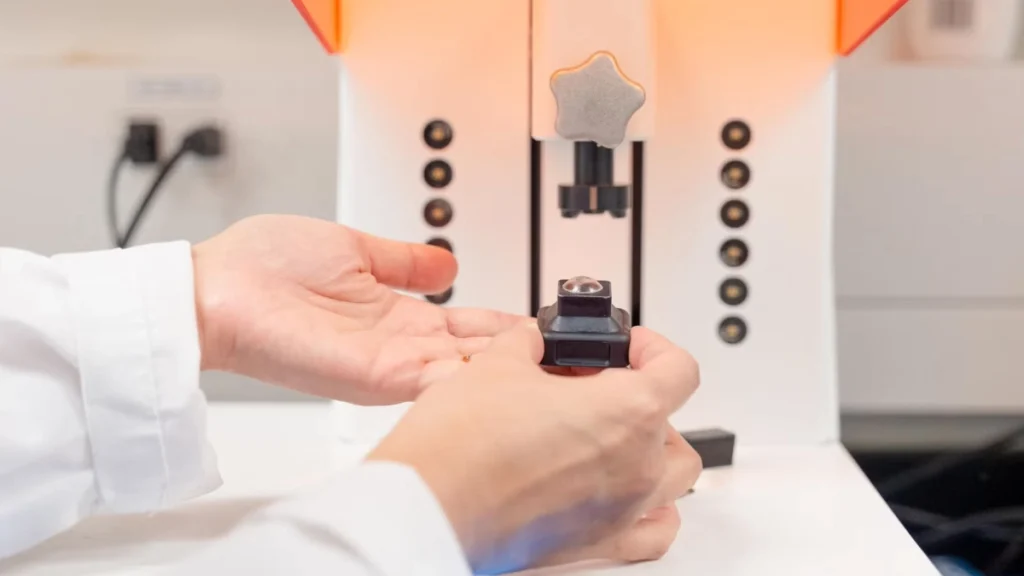
Today, revolutionary advancements in 3D printing are paving the way for a new method of creating custom contact lenses. A recently released study highlights a digital manufacturing platform that uses software to design personalized lenses tailored to individual eye shapes, especially benefiting those with irregular cornea shapes.
Typically, individuals needing corrective lenses are fitted with soft contact lenses based on standardized sizes. However, patients with irregularities often require custom hard lenses, which can be expensive and time-intensive to produce. This new approach promises to streamline the process by allowing lenses to be created quickly, in about 20 minutes, using a combination of innovative software, a new silicone material, and advanced 3D printing techniques.
Shirley Tang, a co-author of the study and a materials chemist at the University of Waterloo, expressed excitement about this technology’s potential to offer truly personalized contact lenses. The platform’s custom design software formulates lenses that precisely conform to the unique contours of a patient’s cornea, ensuring optimal fit and vision correction.
By utilizing a specially developed hydrophilic silicone formulation that works effectively with 3D printing processes, the lenses retain properties essential for comfort, clarity, and performance. The innovative creation process layers this material one slice at a time, and the addition of a non-contact smoothing coating enhances clarity and comfort without disrupting the lens’s custom shape.
Laboratory tests affirm the biocompatibility of the lenses, indicating they are safe for use with living tissue, and the research team is preparing for further studies involving live organisms. Additionally, they are working on securing a full patent for their hydrophilic silicone material, which aims to significantly reduce the current costs of custom lenses that can typically range from $500 to $1,500 when factoring in production and multiple doctor visits.
If this technology successfully transitions to clinical settings, patients could soon enjoy a simplified experience of obtaining custom contact lenses with just a quick scan of their eyes, followed by a wait as the 3D printer generates their personalized lenses on-site.