On the second floor of Tampa General Hospital, a lab dedicated to 3D printing is transforming the medical field. The atmosphere buzzes with machinery as printers work tirelessly, creating intricate models that play a critical role in pre-surgical preparations. Here, engineers and scientists utilize advanced printing technology to replicate human organs, enabling surgeons to practice complex procedures.
In this state-of-the-art facility, a massive 3D printer resembles an inkjet machine on a grand scale. Over an 11-hour period, it meticulously constructs a replica of a patient’s heart, layer by layer, from detailed imaging data obtained through CT scans and MRIs. As explained by Shayne Kondor, the lab manager, these models provide invaluable advantages when confronting high-risk surgeries. Doctors can interact with these tangible replicas to anticipate potential complications before entering the operating room.
With over thirty years of advancements in physical modeling technology, 3D printing has rapidly evolved from an engineering tool into a pivotal asset for healthcare professionals. Kondor’s journey reflects this evolution, stemming from aerospace engineering to utilizing 3D printing for healthcare at prestigious institutions across the country before settling at Tampa General.
The lab houses seven advanced machines, which collectively represent a significant financial investment, enabling the printing of over 100 different materials ranging from rubber to specialized medical-grade resins. To ensure accuracy in the printing process, engineers convert the grayscale images of patient scans into precise instructions, dictating the thickness and composition of each printed layer. This meticulous approach ensures that the replica matches the patient’s heart in both size and texture, offering a realistic model complete with details such as valve thickness and the presence of any clots.
Beyond cardiac applications, Tampa General’s lab collaborates with USF Health to develop innovative solutions, including 3D-printed skull plates for reconstructive surgeries and custom heart valve replacements that utilize a patient’s own cells. Recently, the lab designed an insert for blood transport coolers that significantly improved blood preservation, demonstrating its broader impact on patient outcomes.
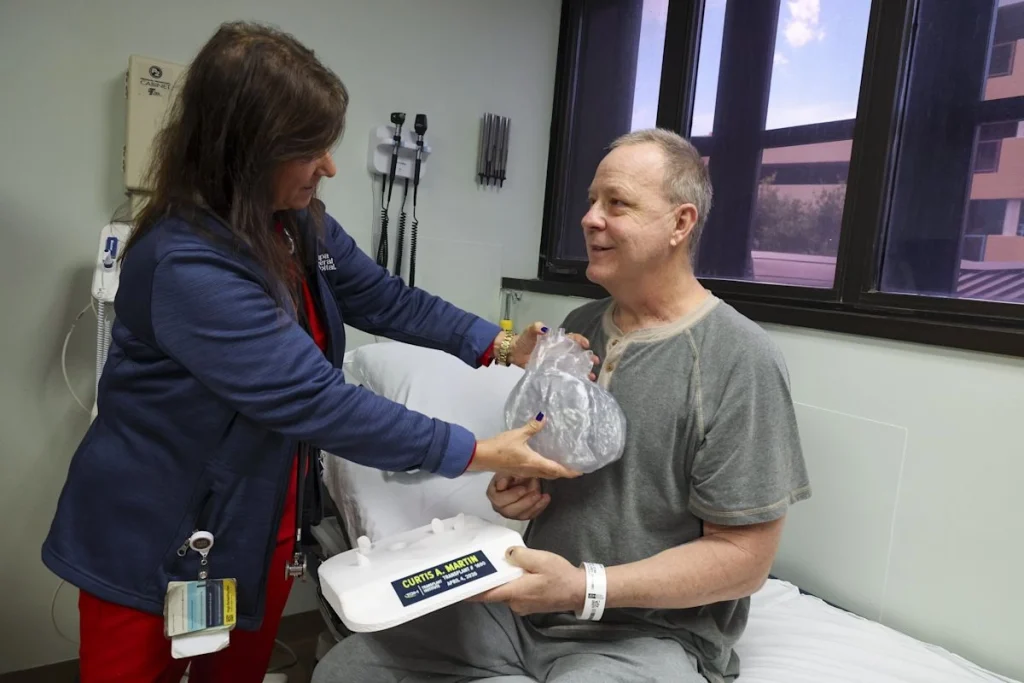
In a touch of humanity amidst the technological advancements, Dr. Debbie Rinde-Hoffman has initiated the “Meet Your Heart” program, allowing heart transplant patients to receive a 3D-printed model of their own heart post-surgery. Inspired by similar initiatives, this program aims to provide patients with a memento of their journey, combining education and sentimental value.
The tangible representations produced in this lab not only enhance the medical community’s ability to plan and execute complex operations but also foster a deeper connection between patients and their healthcare experiences. With its commitment to innovation and patient care, Tampa General Hospital’s 3D Medical Visualization and Printing Lab is at the forefront of transforming health outcomes through technology.