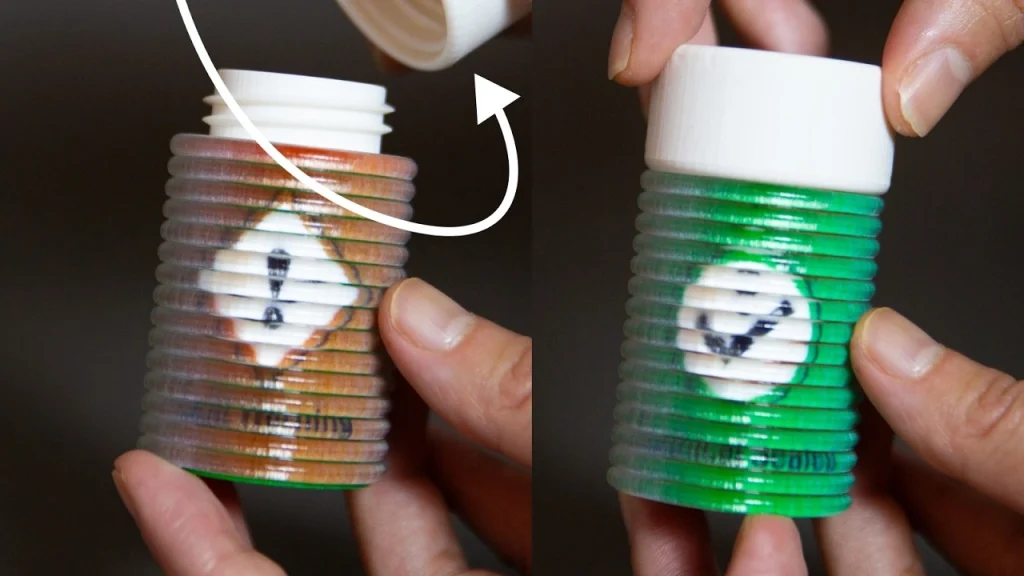
You can 3D print a dazzling array of objects, from iconic characters like Yoda to highly intricate models. However, as your printing skills evolve, you may seek out more inventive projects. Enter the innovative lenticular prints conceived by MIT’s Computer Science and Artificial Intelligence Laboratory (CSAIL).
The ShiftLens design utilizes a dual-layer approach: a transparent lens layer sits on top of a patterned layer made of alternating colors. This unique setup corresponds directly with the linear lenses above it. An actuation mechanism—a knob, switch, or roller—allows the lens layer to move relative to the patterned layer, producing a dynamic color-changing effect as the layers shift. While this concept might initially come across as a novelty, it holds potential for practical applications. For example, consider using lenticular printing on a bottle to indicate whether the container is securely closed.
As of now, there isn’t a public design tool available for creating these prints, but the team at MIT developed an internal tool using Rhino software to facilitate their work on the project. The innovative approach to 3D printing is not only captivating but also ripe for replication, suggesting that it won’t be long before many in the DIY community start experimenting with this technique. Other exciting 3D print hacks have emerged recently, including a new slicer that allows printing horizontal overhangs without the need for support.
For further exploration of 3D printing innovations, you can check out other print hacks.