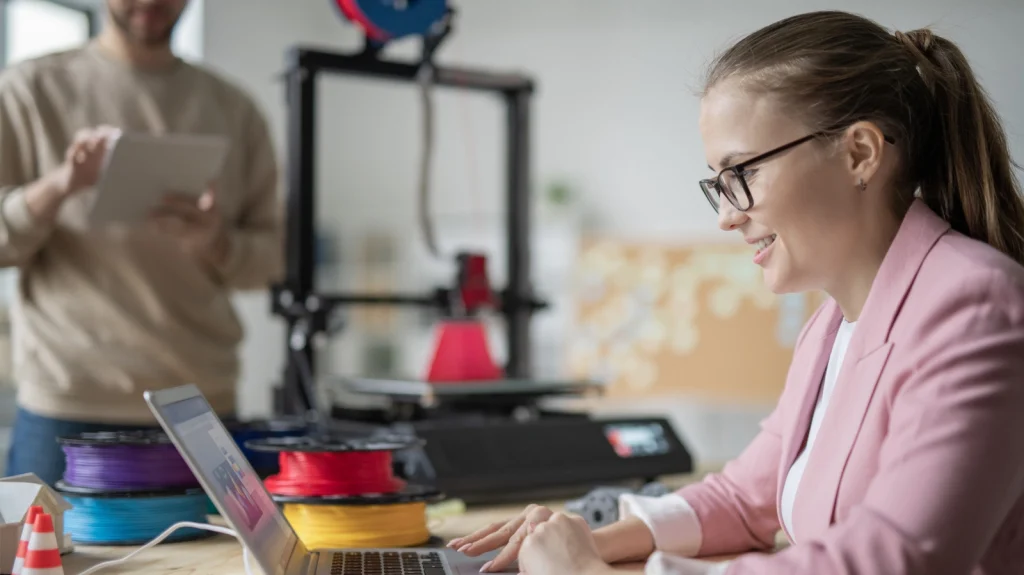
A 3D printer may fit on a bedside table, but that doesn’t make a bedroom a suitable place to run one. Prints can take hours, and a working printer releases airborne particles and gases that you could breathe in while sleeping or working nearby.
PLA still produces emissions
Even PLA, often considered a safer filament, isn’t emission-free. The EPA says filament printers can release ultrafine particles and volatile organic compounds (VOCs). Ultrafine particles can reach deep into the respiratory system, and some VOCs may be harmful when inhaled.
PLA generally produces fewer particles than ABS, but emissions vary with the filament, additives and printing temperature. A 2026 test of 17 commercial filaments found that ABS emitted more particles than conventional PLA. Choosing PLA may reduce emissions, but it doesn’t eliminate them.
Laboratory research has also observed signs of inflammation and cellular stress in human airway cells exposed to emissions from PLA and ABS printers. Those tests don’t establish the effects of long-term exposure at home or define a safe level for a bedroom.
Resin printers require additional precautions. The National Institute for Occupational Safety and Health (NIOSH) warns that uncured resin can cause skin reactions or asthma. Washing and curing prints can create further exposure risks, especially when solvents are used.
Choose a well-ventilated location
A separate room or workshop that exhausts air outdoors is a better choice than a bedroom. A garage may work if it has suitable ventilation and stable enough temperature and humidity for printing. Keeping a printer away from your desk reduces how much time you spend beside it, but distance alone doesn’t replace ventilation.
For a home office, an enclosure with exhaust ducted outside can capture emissions near the printer. An open window may bring in fresh air, but it won’t necessarily remove particles and gases reliably. NIOSH recommends capturing emissions close to the source and limiting time spent near an operating printer.
Air filters can help, but they have limitations. HEPA filters capture particles, while activated carbon can reduce some VOCs when enough carbon is used. Neither makes a poorly ventilated room automatically safe, and enclosures, ducting and replacement filters add cost.
If you don’t have a suitable place for a printer, a local printing service may be a better option. NIOSH also recommends keeping printers away from flammable materials and installing fire detection in printing areas.