Rivian has invested more than $5 million in 3D printers, using them to speed up vehicle development and reduce the cost of making prototypes. The company says the technology has already saved it millions compared with conventional prototyping methods.
Traditional processes often require outside suppliers and expensive tooling. Printing parts in-house can cut supplier and shipping costs, and shorten turnaround times from weeks to days—or even hours. Rivian also spends about $1.7 million a year on printing materials.
The company has used 3D printing at its Detroit facility for items including an early version of the R2’s steering wheel, electric motors for fluid testing, tooling guides, press inserts and trim pieces for early production builds.
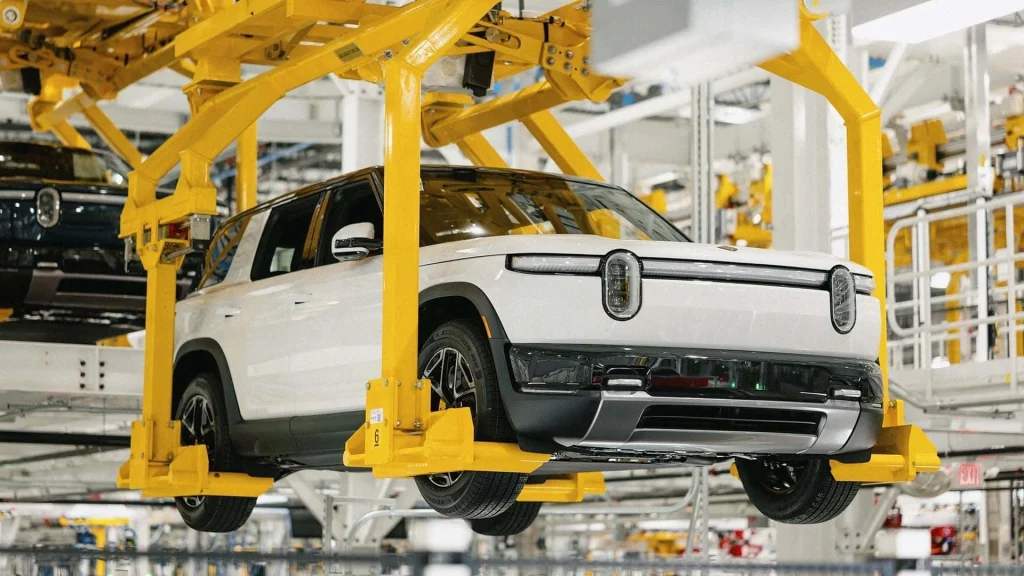
Now Rivian plans to expand the technology across the company. It is installing a bank of printers at its Normal, Illinois, factory, including machines capable of making flexible silicone parts. The goal is to let engineers print parts on demand and get physical prototypes in hand quickly.
“We’re going to be democratizing 3D printing for the entire company,” said Jonathan Dankenbring, Rivian’s head of additive manufacturing, in an interview with CNBC.
Rivian is among several automakers using additive manufacturing to make parts and prototypes faster and more affordably. As printers become smaller, quicker and more precise, the technology is increasingly accessible to both large manufacturers and hobbyists.