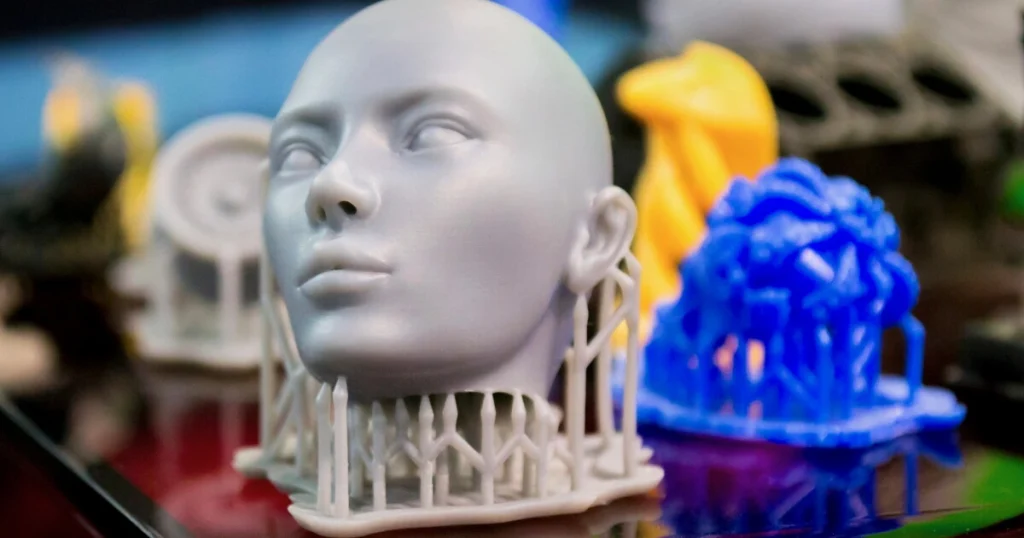
Recent advancements in 3D printing technology have introduced a revolutionary approach to recycling 3D-printed materials, significantly enhancing sustainability in manufacturing processes. Traditionally, stereolithography (SLA) has been the go-to method for creating high-resolution 3D structures, but this technique has inherent limitations—mainly, the inability to recycle resin once it has been cured with ultraviolet (UV) light. This resulted in wasted material during printing, which poses financial and ecological challenges, especially in environments such as space, where resources are severely limited.
Researchers at Yokohama National University have made a groundbreaking discovery that addresses this issue, allowing for the recycling of 3D-printed resin. Published in the journal ACS Omega, their study highlights the use of anthracene—a solid aromatic hydrocarbon derived from coal tar—which can undergo reversible chemical reactions. This means that when exposed to heat, the resin can revert to a form that can be reused, a critical innovation for the future of sustainable manufacturing.
Professor Shoji Maruo, one of the study’s co-authors, explains that traditional resins form irreversible networks, which complicates recycling. However, the new anthracene-based resin can be printed with precision and then recycled without the need for additional chemical initiators. This approach not only simplifies the resin manufacturing process but also significantly enhances the performance and recyclability of the materials used in 3D printing.
The research team employed two curing methods—single-photon and dual-photon lithography—to create detailed 3D models. Their experiments confirmed that the recyclable resin maintained high precision, comparable to traditional materials, while allowing for numerous recycling cycles. Even after multiple rounds of printing and melting, the material’s integrity remained largely intact, indicating its potential for long-term applications.
As they advance their research, the Yokohama team is keen to optimize this new resin for large-scale 3D printing and enhance its durability and heat resistance. This breakthrough could pave the way for more sustainable 3D printing practices, making it particularly valuable for potential human habitats on the Moon and Mars, where efficient use of resources is critical.
With this innovation, the future of 3D printing looks promising, potentially reshaping the way materials are used and reused in various industries. This advancement not only curtails waste but also opens avenues for sustainable practices in environments that demand resource efficiency.
Source: Yokohama National University via EurekAlert