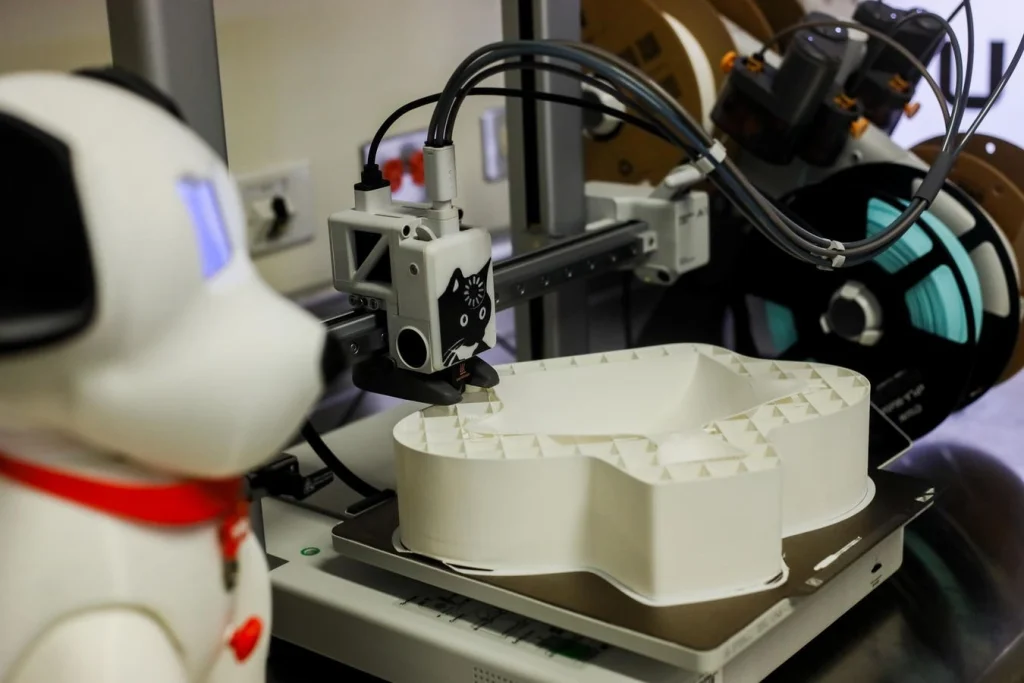
AI is revolutionizing the 3D printing industry by making design as effortless as conversation, thereby shifting the focus towards seamless creation of objects from ideas. A prime example of this transformation is the University of Colorado Anschutz’s new 3D Printing Hub, which showcases advanced denture production through multimaterial inkjet printing, allowing for the rapid creation of items without traditional manual processes.
Historically, the 3D printing workflow faced significant obstacles, largely due to the need for CAD modeling and manufacturing coordination. These hurdles often meant that dentists and other specialists were reliant on other professionals to bring their concepts to life. However, generative AI is changing this narrative by enabling users to generate 3D models with simple inputs, removing these barriers and allowing professionals to directly participate in the making process.
The competitive landscape of the 3D printing industry is evolving. No longer do companies need to solely focus on building faster printers; the emphasis is shifting to creating a seamless journey from idea to finished product.
One notable player in this transition is Creality, a Shenzhen-based company known for its affordable desktop 3D printers. Since its inception, Creality has shipped over 6.7 million printers worldwide. Following its IPO in 2026, the company has expanded from hardware into a more integrated ecosystem that includes software, AI modeling, and digital manufacturing services.
At the core of Creality’s ecosystem is Creality Cloud, where millions of users can access printable models and manage print jobs. AI-driven tools on this platform significantly contribute to user engagement, reactivating thousands of dormant users monthly. Through such integration, Creality is tapping into a broader audience that previously felt disconnected from 3D printing.
Creality’s modeling platform, MakeNow, includes user-friendly tools powered by AI in collaboration with Tencent. This partnership enables users, regardless of CAD experience, to create complex 3D models quickly, such as personalized figurines or clinical models for medical purposes. This collaborative approach bridges technical gaps and enhances accessibility.
As illustrated by the CU Anschutz dental hub, the integration of AI, digital manufacturing, domain expertise, and clinical workflow is crucial. Here, the technology complements the expertise of specialists, promoting a cohesive model that emphasizes creativity over mere machinery.
The future of the 3D printing industry is clear: companies must build comprehensive ecosystems that connect software, hardware, and application layers. Those who manage to make the process from conception to production as seamless as possible will dominate the field. Ultimately, while hardware is vital, the true potential lies in harnessing human creativity, enhanced by AI, to redefine industries and improve everyday life.