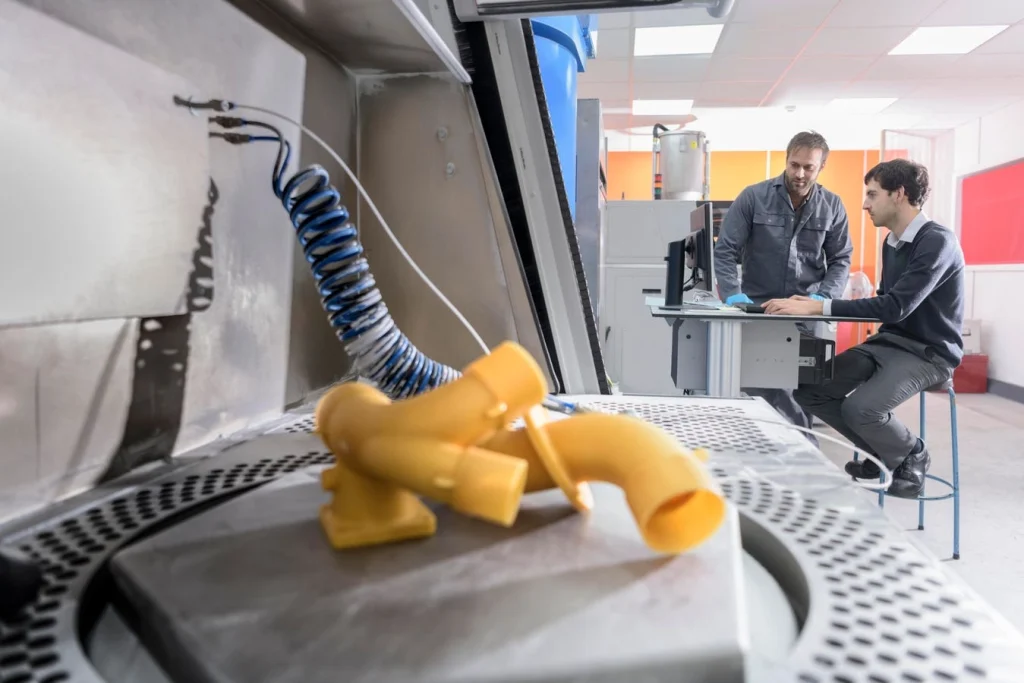
3D printing is revolutionizing production by shifting the focus from traditional mass manufacturing to on-demand, distributed manufacturing. While commonly associated with prototyping and experimentation, its role in actual production is expanding, bringing significant implications for business leaders.
The Need for Digital Governance
Leaders must recognize that in a production context, 3D printing alters the assumption of quality verification. Unlike traditional manufacturing, where the finished part can be inspected, the process involves multiple variables including design files, materials, and machine settings. Establishing a digital governance system ensures traceability and consistency in outputs.
Transitioning Spare Parts to Digital Inventory
The traditional approach of storing an extensive inventory of spare parts is becoming outdated. 3D printing enables organizations to produce parts on-demand, vastly improving responsiveness while reducing inventory costs. Nonetheless, leaders must prioritize quality assurance and IP protection as certification becomes increasingly critical.
Rethinking Engineering Skills
Not all engineering teams are prepared for the shift to additive manufacturing. Those trained in traditional methods may find it difficult to adapt. Companies need to invest in re-skilling initiatives to promote innovative design practices compatible with 3D printing capabilities.
Design Freedom vs. Process Discipline
While 3D printing offers the ability to create complex parts economically, the freedom to design does not absolve the need for disciplined processes. Understanding material characteristics and ensuring quality assurance becomes more essential.
Evaluating Economic Factors Beyond Print Speed
Leaders should evaluate the comprehensive economics of 3D printing beyond just the speed of the printer. Considerations such as the durability of materials, lifecycle economics, and workforce requirements should inform decision-making.
The Shifting Landscape of Supply Chains
3D printing enables localized production and just-in-time manufacturing, fundamentally altering supply chain dynamics. As inventory becomes digitized and production decentralized, demand forecasting becomes increasingly crucial, putting pressure on organizations to enhance their supply chain management strategies.
Predictive Quality Control
With 3D printing, traditional methods of quality control must evolve. Real-time data analytics can help detect defects early in the production process, shifting the focus from reactive quality checks to proactive monitoring.
Overcoming Barriers to Adoption
Adopting 3D printing technology involves challenges, including material performance and certification. Organizations must assess whether the benefits of 3D printing align with their production needs, as not every component is suitable for this method.
Customization and Competitive Advantage
Companies embracing 3D printing can gain competitive advantages by offering customized solutions previously deemed economically unfeasible. Encouraging innovation in design will lead to breakthroughs that traditional manufacturing cannot match.
Ensuring Consistency Through Qualification
Part qualification remains a significant hurdle. Proof of concept through successful prototypes is not a guarantee of repeatability across batches and machines. Establishing robust monitoring and certification processes is essential for successful production.
Legacy Parts and Sustainability
3D printing allows for the production of legacy parts, eliminating the need to abandon aging equipment. However, rigorous testing and validation processes must be implemented to ensure these parts meet performance standards.
Through these considerations, organizations can navigate the complexity of integrating 3D printing into their production systems effectively, leveraging its innovative capabilities while mitigating risks. As the technology continues to mature, its impact on manufacturing practices will only grow.