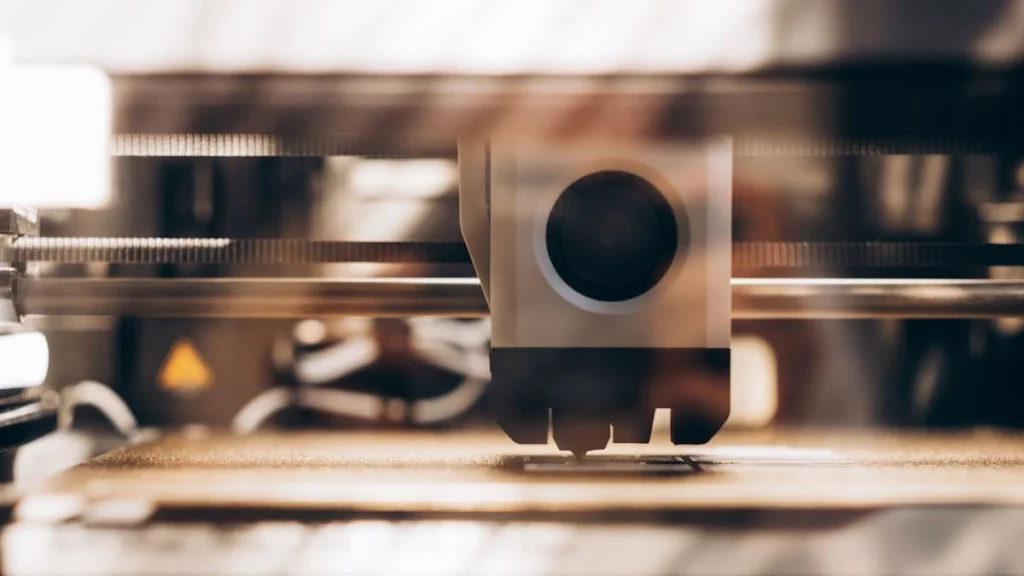
Researchers at the University of Rochester have converted a standard Ender 3 3D printer into a low-cost bioprinter for studying engineered living materials (ELMs). The modified machine cost about $450, compared with commercial bioprinters that can exceed $100,000.
The team kept most of the printer intact, replacing its print head with a syringe pump built from custom 3D-printed PETG parts. Designed for a 10-milliliter glass syringe, the pump controls the extrusion and retraction of the material. The researchers used SolidWorks to create print designs and Slic3r to prepare them, adapting the settings for the printer’s narrow 0.254-millimeter needle.
Instead of plastic filament, the printer dispenses a bio-ink made from bacteria and alginate. The ink is deposited into agarose or gelatin support gels. Agarose can keep printed material viable for at least four weeks, while gelatin supports prints that can later be extracted. Calcium ions in the gels help the alginate form a stable structure around the living bacteria.
ELMs use living organisms as functional materials. Although the study focused mainly on bacteria, the researchers say the approach could help advance work on materials for antimicrobial treatments, plastic degradation and wastewater processing. Bacterial cellulose could also have potential as a biodegradable alternative to plastic.
By making bioprinting equipment more affordable and developing materials that help prints hold their shape, the team hopes to make ELM research accessible to more labs and accelerate progress in the field.