One of the strengths of additive manufacturing lies in its compatibility with a broad spectrum of materials, including polymers, metals, concrete, and even food pastes. Recently, there has been a growing interest in using ceramics, notably technical ceramics, within this technology. While zirconia and alumina have been predominant in the market, silicon nitride (Si₃N₄) is gaining attention due to its outstanding thermomechanical properties. This article delves into the properties, uses, and potential applications of silicon nitride in 3D printing.
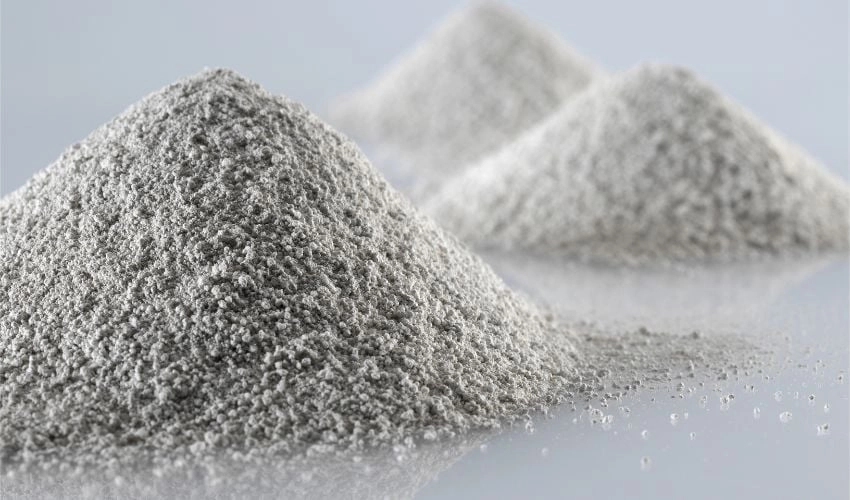
Silicon nitride is produced by heating silicon powder in a nitrogen atmosphere. It is among the hardest and most durable technical ceramics available, boasting a low density and remarkable resistance to thermal shock, wear, and corrosion. Its ability to endure extreme heating followed by rapid cooling without cracking makes it particularly suitable for brazing and welding applications.
Applications of Silicon Nitride in 3D Printing
Silicon nitride is versatile and available in various forms, accommodating different 3D printing processes for creating complex parts. Material extrusion, particularly using pellet-based 3D printers, is a common method. Although there are fewer filaments available, some thermoplastics, like those from Spectrum Filaments, do exist, containing around 21.5% organic content.
In terms of precision, stereolithography enables silicon nitride to be utilized in resin form, allowing for intricate designs with high density. However, post-processing is required to clean the printed parts and cure them, ensuring they reach their intended properties. Leading manufacturers, such as 3DCeram and Lithoz, provide machines capable of working with silicon nitride.
Emerging research also indicates that Binder Jetting may be a feasible option for producing silicon nitride parts, though this method is still limited in application.
Industries Leveraging Silicon Nitride
Due to its high-temperature resistance, silicon nitride has valuable applications across various industries. It plays a crucial role in the automotive sector by being used in certain engine components and bearings. Moreover, in the aerospace industry—known for its stringent requirements for hardness, weight, and thermal resistance—silicon nitride proves especially relevant. It is also utilized in the production of semiconductors and components for pumps and valves, capitalizing on its impressive resistance to liquids and gases.
In summary, silicon nitride’s properties make it a noteworthy material in the realm of 3D printing, particularly for high-performance applications. As the technology evolves, its use is expected to expand across multiple fields.