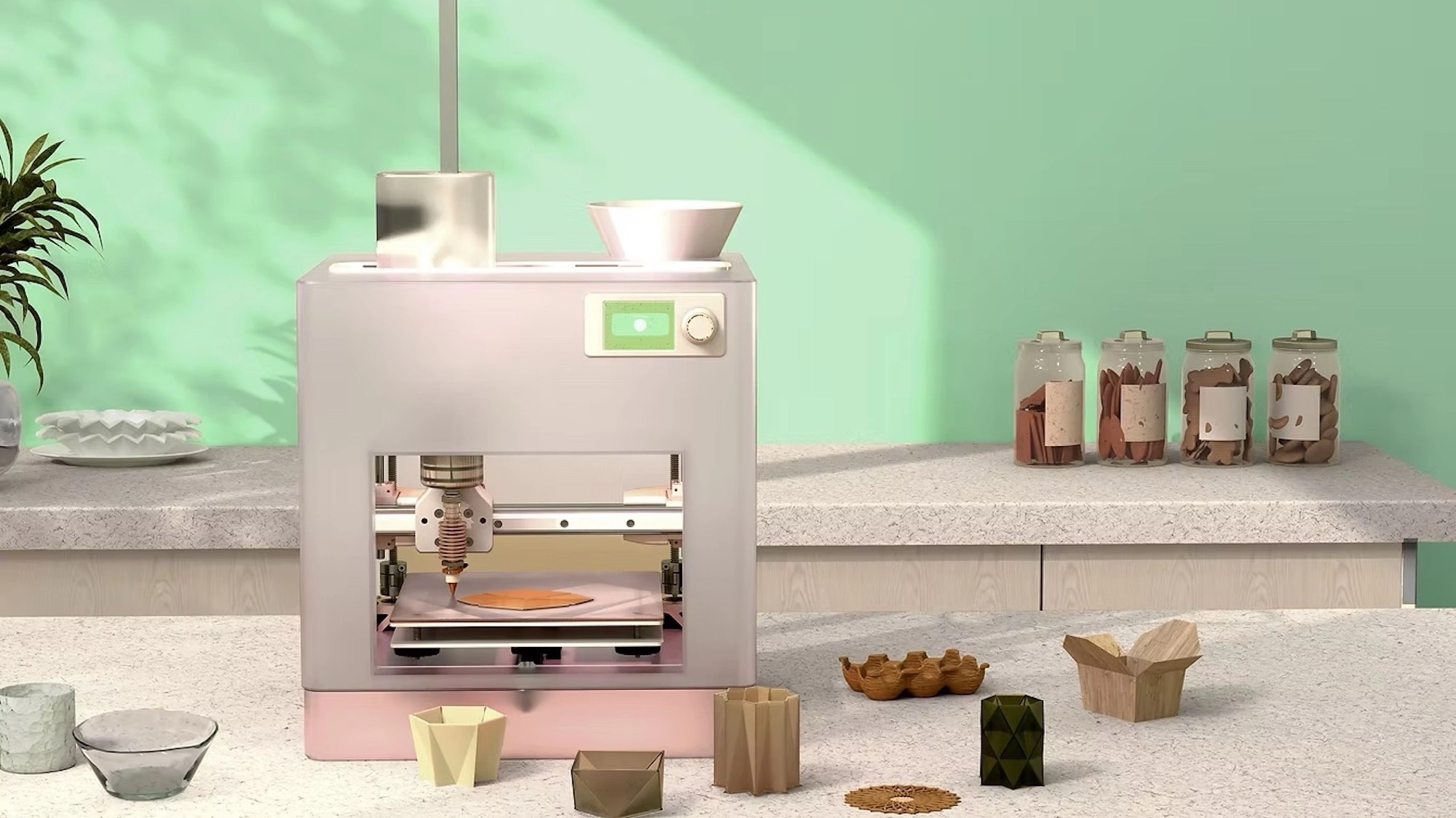
A new 3D printer is set to change how we approach food waste by turning it into functional household items. Developed by researchers at the Massachusetts Institute of Technology (MIT), this innovative device, named the Foodres.AI Printer, transforms food scraps such as eggshells and coffee grounds into everyday objects like coasters and cups.
In the U.S., approximately 66 million tons of food waste are generated annually, with a significant portion ending up in landfills. The decomposing food produces carbon dioxide, contributing to greenhouse gas emissions equivalent to those from around 42 coal-fired power plants. As a response, the MIT team aims to address this issue through their AI-assisted 3D printer which fosters "hyper-local circular economies."
The printing process begins with a mobile app that scans and identifies food scraps. Users take a picture of their waste, and the app analyzes it using AI to suggest possible items to create. Options range from pre-made templates to custom designs, with users able to modify colors and textures based on the materials available.
Once the object is selected, the printer mixes the identified food scraps with natural additives to create a bioplastic paste. This mixture is then extruded into shape through an automated heating system, allowing users to retrieve their finished item with the push of a button. The process is designed for accessibility, ensuring even users with no prior experience in 3D printing can successfully create their products.
Innovations in 3D printing extend beyond household items; recent advancements have enabled 3D printing of food itself. For instance, researchers at Columbia University introduced a printer that can create chicken, beef, and vegetables, even producing an edible cheesecake. Companies like Food Ink have pushed boundaries further by establishing entirely 3D-printed pop-up restaurants.
3D printing technology is also being utilized in healthcare. It is already in use for producing synthetic skin and blood vessels, with the potential for fully printable organs on the horizon. Such advancements highlight the transformative possibilities of 3D printing across various sectors.
For more information on this topic, you can explore related stories about food waste reduction and innovations in 3D printing.