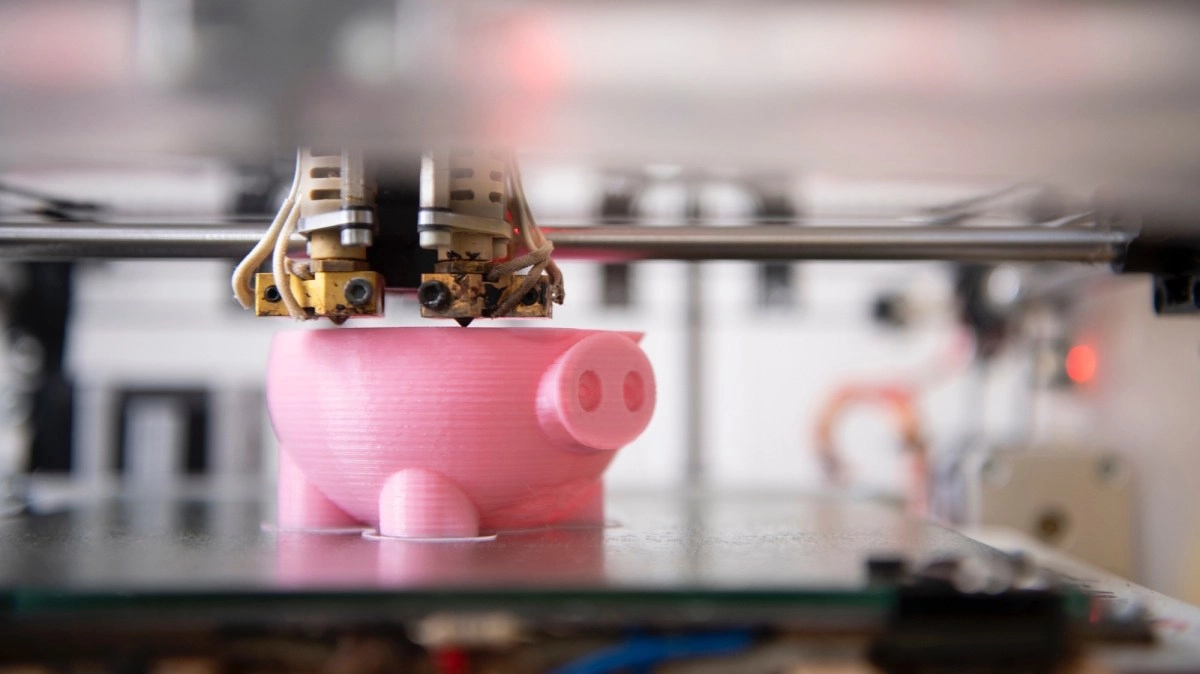
In a typical 3D printing workshop, piles of failed prints and discarded support structures accumulate, starkly illustrating the inherent waste problem of the technology. Although designed to produce objects only as needed, those with experience understand that misprints, scaffolding, and prototypes can create significant waste.
At the Korea Research Institute of Chemical Technology, researchers are working on a revolutionary solution to this dilemma. By using sulfur—an industrial byproduct that is often left to sit in stockpiles—these scientists have created a method to recycle printed objects back into raw material without the need for grinding or reprocessing. The process is as simple as crushing the failed print, loading it back into the printer, applying heat, and producing a fresh object.
The research team’s findings, led by Dr. Kim Dong-Gyun and published in Advanced Materials, suggest that this strategy could significantly reduce waste in 3D printing. Sulfur is produced in vast quantities yearly—around 85 million tons—primarily from oil refineries and gas plants, making it a readily available resource for this innovative method.
The challenge of recycling traditional 3D printing materials lies at a molecular level. Common plastics like PLA and ABS can be melted and reused, but repeated heating breaks down polymer chains, compromising the material’s strength. Photocurable resins, on the other hand, create bonds that cannot be undone once set. The goal of the Korea Research Institute was to find a bond that could be reformed at will, which led them to sulfur.
Historically, the concept of creating plastics from sulfur dates back to 2013, through work done by Jeffrey Pyun and his team. They pioneered a method that made sulfur the primary component of a polymer, leading to a material with unique properties, including the ability to absorb heavy metals. However, adapting this sulfur plastic for 3D printing proved difficult due to its structural density, which made it too viscous to pass through printer nozzles.
The breakthrough came when Dr. Kim’s team shifted their focus from adjusting material ratios to redesigning the molecular network of the plastic. By loosening the structure, they created a polymer that maintains strength while allowing for easy flow through a printer. This adaptation enabled a technological property called shear-thinning, wherein the viscosity decreases under pressure, facilitating the printing process.
One of the most significant advantages of this sulfur-based material is its recyclability. Once an object is printed, it can be reheated, reshaped, and cooled to become solid again without degrading the material. This method, dubbed ‘closed-loop printing’, ensures that the plastic does not leave the cycle as waste.
Additionally, the unique properties of sulfur allow for advancements in 4D printing. The dynamic bonds within the material can undergo transformations in response to heat or light, enabling the printed objects to morph post-production. The research has demonstrated multiple soft robots that utilize this ability, operating without batteries or motors. For instance, a tiny underwater robot can roll in water when exposed to magnetic fields, and a capsule-shaped robot can autonomously release a chemical catalyst at a specific temperature.
While the potential is promising, commercialization is still distant. With encouraging recycling capabilities proven in controlled environments—up to ten cycles so far—more extensive testing and collaboration with industry are necessary to move towards practical applications.
The integration of various properties into a single material represents a significant advancement in 3D printing technology. This innovation not only aims to tackle waste from existing processes but also pushes the boundaries of what 3D-printed objects could accomplish in the future.