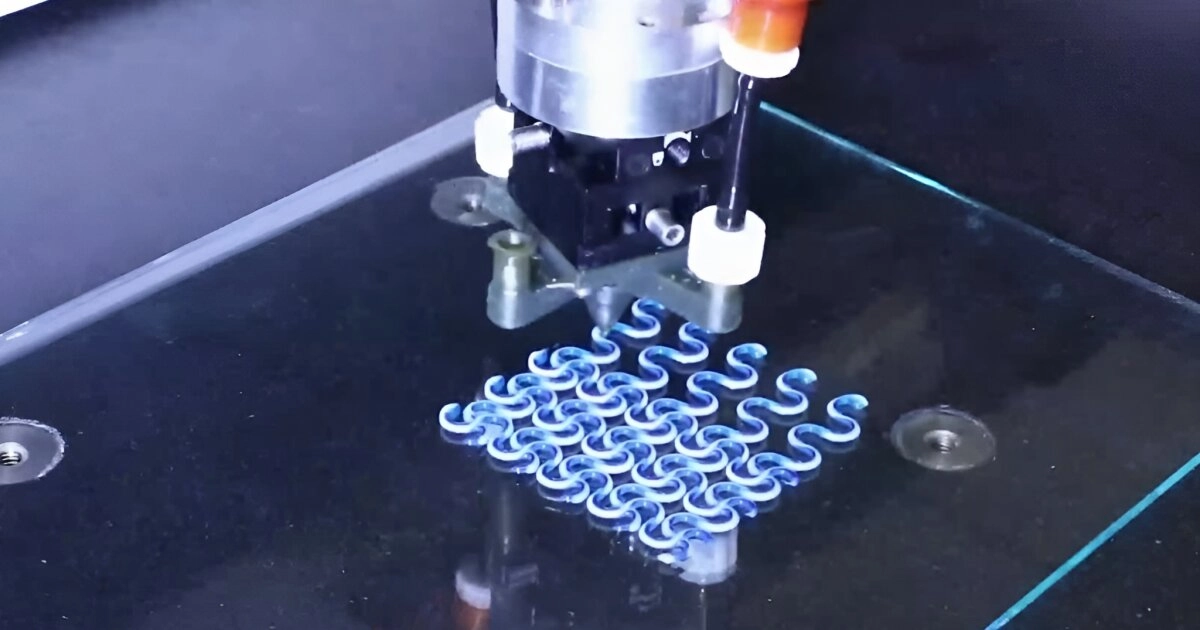
The future of robotics is evolving towards creating machines that could be virtually indistinguishable from humans, particularly with the development of new 3D printing technology at Harvard University. Researchers have discovered a way to print artificial muscle-like filaments whose movements are pre-programmed into the material itself, making strides in replicating the complexities of human muscles.
Historically, robots have had their components, like skeletons, brains, and sensory systems, developed, but replicating the fluid motion of muscles has been a significant challenge. Traditional robotic movement depends on rigid systems like electric motors and hydraulics, which lack the flexibility and natural movement found in biological organisms. Muscles, in particular, are remarkable for their ability to execute a wide range of actions—from delicate movements like painting to forceful actions such as kicking down a door.
The novel approach developed by Harvard’s researchers combines two types of soft materials: an active liquid crystal elastomer that changes shape when heated, and a passive elastomer that resists deformation. By 3D printing these materials side-by-side, they can control how each component of the filament behaves when activated. This process allows the creation of a filament that can bend, curl, twist, or coil simply by adjusting its internal material structure.
The team demonstrated the potential of this technology by creating advanced soft structures that react to heat in various ways. Some lattices expanded while others contracted, and they also successfully crafted soft grippers that can grasp and release objects with precision.
Although groundbreaking, this technology is still in its early stages and has limitations, particularly in terms of response time and energy efficiency, since it currently requires heat for activation. Regardless, this innovative method paves the way for future applications in adaptive robotics and biomedical devices, and it shows promise for generating more sophisticated and flexible robotic systems.
For more information, visit Harvard University.