Lighting 3D prints on fire may not be the desired result of most projects, but understanding how different materials respond to flames can be scientifically valuable. A recent experiment by Maker’s Muse involved igniting various 3D printed parts to observe their behavior when exposed to significant heat.
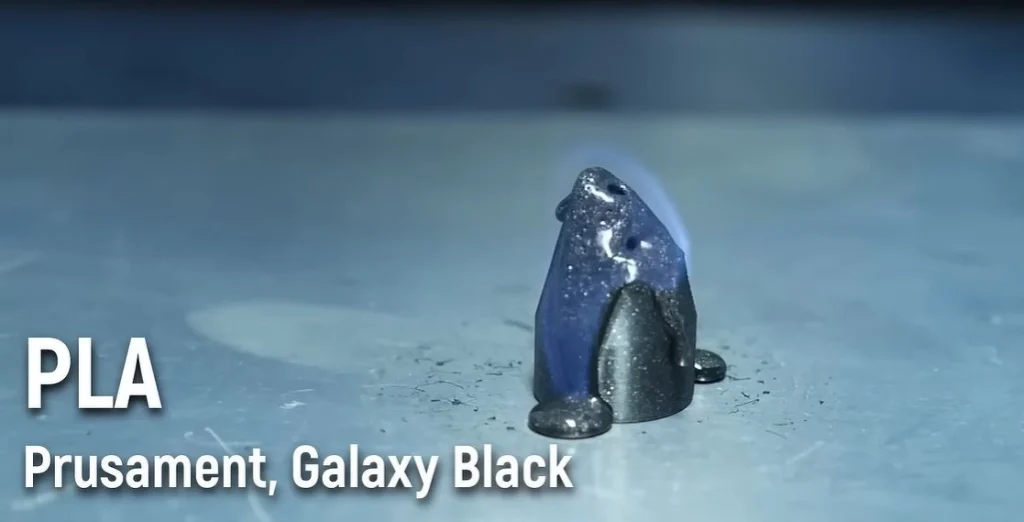
The materials tested included a range of common 3D printing filaments such as PLA, PETG, ABS, ASA, TPU, and PEBA. The results varied significantly between the materials. For instance, standard PLA, which contains a high amount of carbon, burned readily. However, there was a notable difference in the ignition characteristics between an Elegoo PLA+ test cone and a Prusa Galaxy Black PLA cone; while the former ignited easily, the latter required a blow torch to ignite and burned with a high temperature.
Interestingly, a specific type of PLA known as HTPLA demonstrated a remarkable ability to resist burning, extinguishing itself almost immediately after being treated with a blowtorch. The differences in burning characteristics among PLA samples suggest that additives play a crucial role in their behavior under heat.
When it came to PETG, the black variant proved to be difficult to ignite, in stark contrast to ABS and ASA, which ignited easily with a sooty yellow flame. HIPS, too, exhibited similar burning properties.
Among all tested materials, TPU was the least flammable; even a blowtorch failed to ignite it, only causing it to melt. However, it was noted that foam TPU burned aggressively compared to its solid counterpart, followed by ABS, ASA, and HIPS. Overall, for those concerned about fire hazards, PETG and standard TPU appear to be safer choices than other filament types, as they are less likely to ignite and pose fire risks.
For further knowledge about the properties of these materials, you can refer to resources on 3D printer filament and fire hazards.