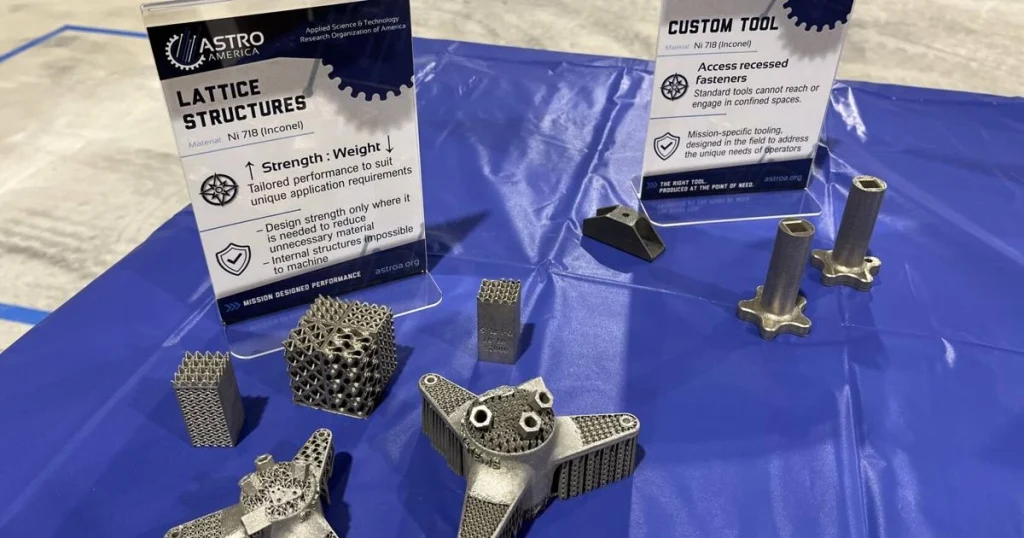
The Guam Additive Materials and Manufacturing Accelerator (GAMMA), an initiative of the Applied Science and Technology Research Organization (ASTRO), is set to reach its initial operating capacity by the end of July 2026, with plans for full capacity by February 2027. This announcement follows the groundbreaking ceremony held on November 6, 2025, at the Pacific Industrial Park in Dededo.
During a recent visit to Guam, ASTRO’s co-founder, Neal Orringer, shared the progress of GAMMA, which is part of a $40 million initiative led by the U.S. Navy aimed at enhancing defense production capabilities in the Indo-Pacific. By facilitating local production of essential components for vehicles like submarines, ambulances, and fire engines within weeks rather than months, GAMMA aims to streamline the supply chain and reduce reliance on imports.
Orringer emphasized that GAMMA will primarily support the U.S. Navy, but it also plans to collaborate with other military branches, local government agencies, and organizations facing challenges in sourcing unique vehicle parts. The initiative aims to cater to industries with specialized needs, such as emergency response vehicle components.
A critical component of GAMMA’s operations will be its focus on quality evaluation to ensure safety and reliability in manufacturing. The facility will be equipped with advanced evaluation technology, including digital inspection tools and eventually an X-ray CT scanner, enabling comprehensive analysis of manufactured parts to ensure they meet stringent requirements.
Orringer and GAMMA’s general manager, Alex Benham, are keenly aware of the need for a skilled workforce to maintain sustainability in this new industrial sector. To this end, ASTRO plans to collaborate with the Colorado School of Mines and the University of Guam to develop a mechanical engineering program tailored to local needs, complementing the existing civil engineering program at UOG.
Despite potential delays in launching the educational program, Orringer remains confident that there will be enthusiastic interest in pursuing careers within this innovative sector once it is operational. The goal is to cultivate a workforce capable of producing high-quality parts not only for local needs but also for broader applications including the submarine fleet.
As the team at ASTRO works through challenges and gears up for the launch of GAMMA, Orringer expressed optimism about the factory’s potential impact. He envisions it as a world-class manufacturing facility that could set a benchmark on a global scale for advanced manufacturing.