Ukraine has been contending with a war initiated by Russia for over four years, but there’s a notable team working tirelessly to support its defense: DrukArmy, or PrintArmy. This volunteer organization, known in Ukrainian as Drukarmija, mobilizes across Europe to manufacture essential 3D-printed supplies such as drone accessories, medical tools, and other equipment critical for Ukrainian soldiers and rescue workers facing the ongoing conflict.
In Germany, volunteers like Chris, Yevhen, and Will have dedicated their resources to this cause. Each has a unique story of how they got involved; Chris, for instance, originally aided refugees when the invasion began but felt compelled to contribute more directly through 3D printing. With four 3D printers operating continuously in his garage, he produces between 10 to 15 kilograms of parts weekly, costing him around €400 to €500 monthly.
Will, an engineer, also transitioned from helping incoming refugees to using his 3D printer to manufacture useful items for the war effort, believing that supporting Ukraine is crucial to preserving democracy and freedom.
Drukarmija has become the largest 3D printing initiative in Ukraine, with nearly 3,000 activists and around 7,000 devices, as co-founder Yevhen Volnov reports. The operation functions online, resembling a free marketplace where soldiers and emergency responders can place orders for the items they need directly from volunteers.
The supply chain for this initiative is distinctly grassroots: once printed, the items are verified and sent to the front lines, often via small vehicles or taxis delivering crucial supplies directly to those in need.
While the ingenuity behind these grassroots efforts isn’t universally praised—one executive from a major German defense firm dismissed the project as frivolous—Volnov and his team argue that the simplicity and flexibility of their production method have underscored the limitations of more expensive traditional military equipment. Ukrainian forces have thrived by employing lower-cost yet effective drones to thwart larger Russian advancements.
Despite their successes, strict guidelines exist on what German volunteers can produce. They cannot print parts that could be classified as weapons; such requests must be handled directly in Ukraine. However, they can create dummy munitions for training, aiming to educate civilians.
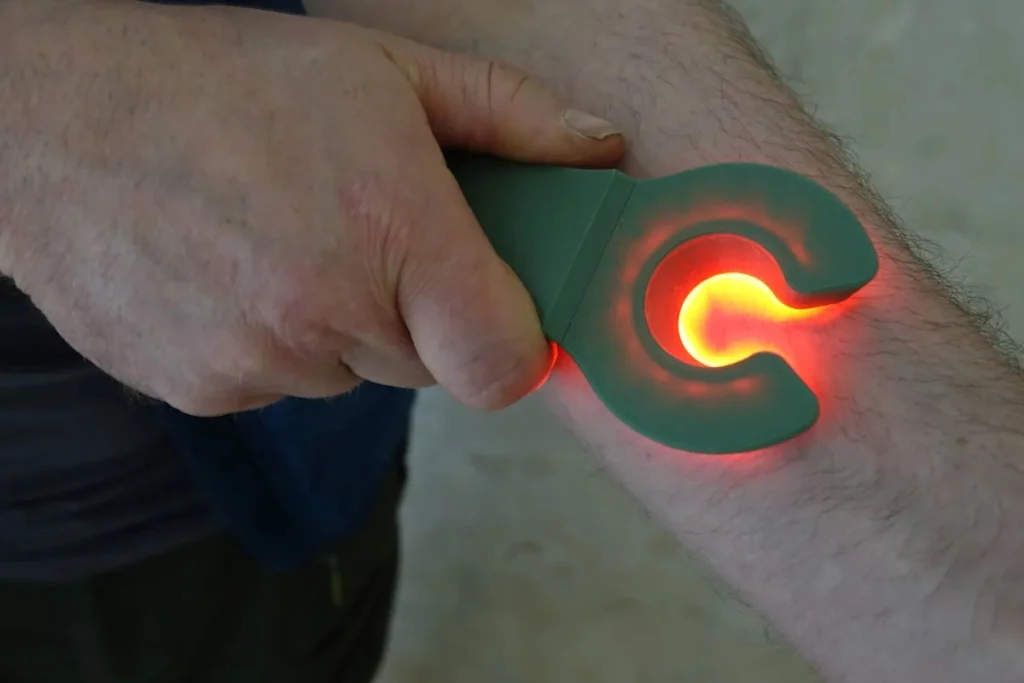
The push to aid Ukraine extends beyond 3D printing as other volunteers, such as Max Uzunov from Energy for Ukraine, work on assembling electronic devices, including torches and vein finders, using refurbished e-bike batteries for use in the field. These tools are invaluable for Ukrainian medics treating the injured, especially in precarious environments.
Through their dedication and innovation, these volunteers not only help sustain the war effort but also maintain hope for Ukraine’s resilience and defense against a formidable adversary.