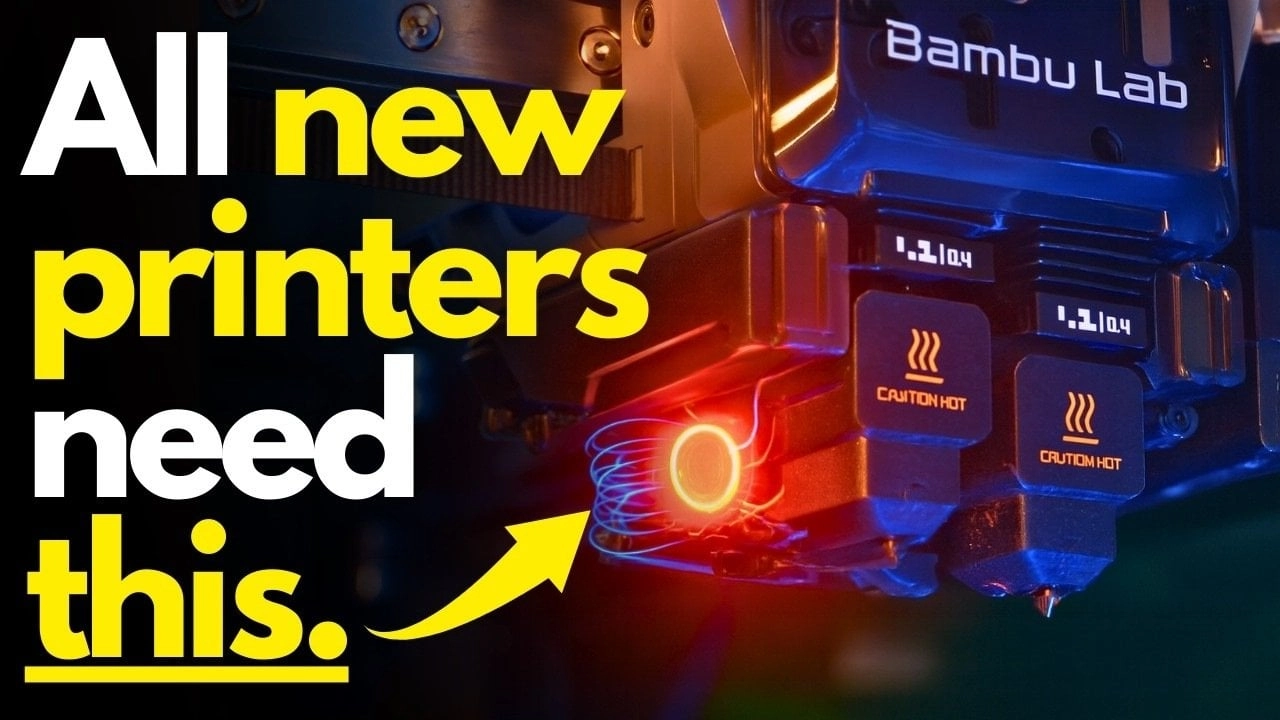
Imagine a future where 3D printers operate with unparalleled accuracy, eliminating issues like uneven layers and material waste. Next-generation 3D printers are harnessing advanced technologies to redefine their capabilities, significantly impacting various industries from healthcare to aerospace and revolutionizing the creative potential for hobbyists.
Advancements in technologies like dynamic calibration and tool changer systems are crucial in transforming the 3D printing landscape. These innovations address longstanding challenges such as material inefficiencies and quality inconsistencies while paving the way for intricate, multi-material designs. However, challenges remain, including filament storage and the calibration of specialized materials. This article provides insights into how these breakthroughs are paving the way for a faster, smarter, and more accessible future for 3D printing.
Key Advancements in 3D Printing
Tool Changer Systems: Boosting Efficiency
Tool changer systems are enhancing the functionality of 3D printers by allowing quick transitions between different materials and colors. This automation cuts down manual intervention, improving efficiency and minimizing downtime. For instance, a tool changer can switch between rigid and flexible materials seamlessly, enabling the creation of complex designs. Nonetheless, their success relies heavily on precise calibration and compatible materials, which are still in the developmental phase.
Dynamic Calibration: Precision in Real-Time
One of the key challenges in 3D printing is maintaining consistent material flow, especially when print speeds vary. Innovations in dynamic calibration, like pressure advance, are tackling this issue by automatically adjusting extrusion parameters. This guarantees smooth and steady material flow, even when print speeds shift suddenly. While technologies like eddy current sensors and Permanent Magnet Synchronous Motor (PMSM) extruder motors enhance precision further, specialty filaments continue to pose calibration challenges that need specialized solutions.
Inline Filament Measurement: Quality Assurance
The performance of filament is integral to achieving high-quality prints. Even minor variations in diameter can lead to ineffective printing outcomes. To combat this, next-gen printers are incorporating inline sensors that measure filament dimensions throughout the printing process. These sensors dynamically adjust extrusion rates, ensuring consistent flow and reducing material waste, thus enhancing sustainability. As these systems evolve, they are expected to become standard in advanced 3D printers, boosting reliability and precision.
Filament Storage: Maintaining Integrity
Proper storage solutions are vital for preserving filament, particularly in humid conditions where moisture absorption can spoil materials like nylon or PVA. While some advanced printers feature basic storage, they often lack the environmental controls needed for long-term filament preservation. As demand for diverse materials grows, developing effective, cost-efficient storage solutions remains a challenge that the industry must address.
Automation and Accessibility: The Future of 3D Printing
The trajectory of 3D printing technology leans towards automation and ease of accessibility. Features like tool changing, dynamic calibration, and inline sensing are expected to be commonplace in upcoming printer models, simplifying processes and increasing usability—whether for professionals or hobbyists. Despite these advancements, challenges regarding filament storage and the calibration of specialized materials remain. Addressing these will be essential to fully harness the potential that 3D printing technology holds.
In conclusion, the advancements in 3D printing are not just incremental improvements; they signal a new era where printers will be faster, smarter, and much more capable. As the technology evolves, it continues to push boundaries, reshaping industries and enhancing creative possibilities. For anyone engaged in 3D printing, the future seems incredibly promising.