Adding magnets to 3D prints can greatly enhance their functionality, but it also presents certain challenges that need to be understood. A recent video by Lost in Tech outlines key points regarding the proper integration of magnets in 3D printing.
The most straightforward method is to embed the magnets after the print is complete. This can be done via friction fit or with glue, but maintaining the magnet’s position is crucial to avoid accidents, especially with curious pets or children.
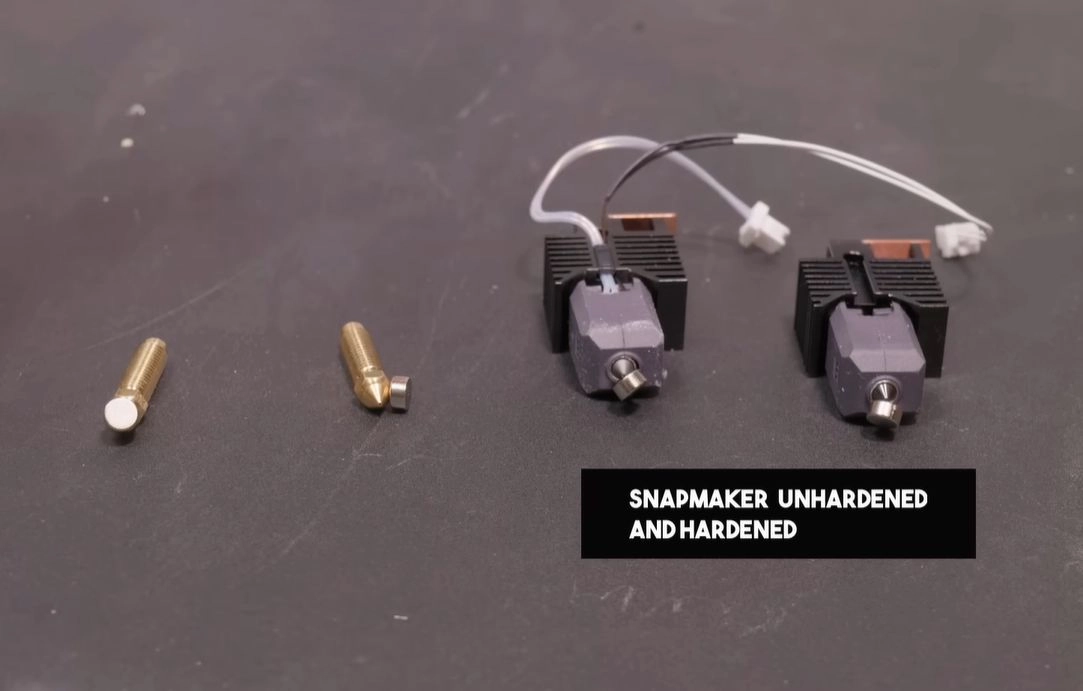
However, embedding magnets during the printing process can be more complicated. Many extruder nozzles are made from ferromagnetic materials, which means that magnets can attach to them unintentionally. Even some nozzles marketed as brass may not be pure enough to remain non-ferromagnetic.
Heat is another critical factor, as magnets tend to lose their magnetic properties at elevated temperatures. This is particularly important when using heat inserts for bolts, as the heat from a soldering iron typically exceeds the demagnetization threshold of standard magnets, usually around 200°C. Fortunately, if a magnet does attach to a heated nozzle, it will likely fall off as it demagnetizes.
In modern FDM printers, heated beds often utilize magnetically adhesive plates configured in a way similar to a Halbach array. However, many available alternatives do not embody true Halbach arrays and feature merely alternating magnetic poles. When a strong magnet, such as a neodymium magnet, is brought close to these arrays, it can disrupt their magnetic field, potentially altering their polarity.
While you can incorporate magnets during printing, techniques such as side-insertion help prevent them from being pulled out by the nozzle. It’s essential to be aware of the risks associated with ferromagnetic nozzles, the nature of the magnetic bed, and the general behaviors of magnets in heated environments. Higher-temperature magnets are available, yet many challenges persist regardless of their thermal resilience.