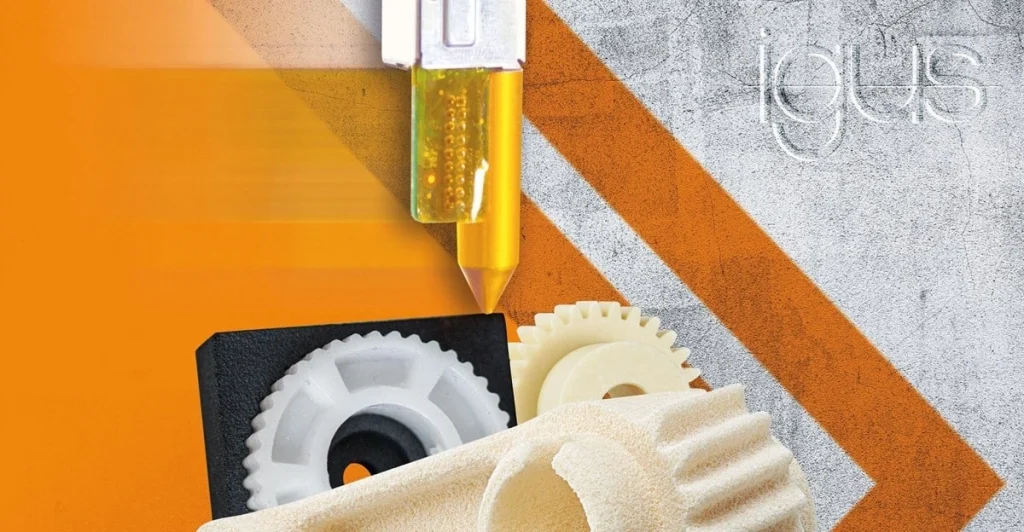
For decades, polyoxymethylene (POM) has been a staple engineering plastic used in wear and load-bearing applications. As technology evolves, 3D printing is beginning to challenge traditional materials like POM, especially in specialized applications. A recent study by igus, a polymer manufacturer, sheds light on how their tribological 3D-printing materials compare to conventional POM.
In their white paper, igus explored the performance of its iglidur 3D-printing materials against POM, particularly in terms of friction, wear, and service life for gears, bearings, and bushings. The findings suggest that these 3D-printed materials could provide a viable alternative to POM, maintaining the required durability and performance for demanding tasks.
The tests were conducted in a grease-free context, relevant for situations where lubrication isn’t possible or advisable. igus’s specialized materials incorporate solid lubricants within the polymer, allowing components to function without external lubrication, compatible with various additive manufacturing techniques, including FDM, SLS, and DLP.
The results showed that igus’s 3D-printed materials exhibited lower wear rates and more consistent friction than traditional POM. For instance, during gear testing, igus reported more than eight times the service life in certain tests and up to five times less wear than POM in pivot tests.
While these results are significant, igus emphasizes that they pertain specifically to the materials and conditions tested and should not be generalized across all POM applications. Ian Hewat, the managing director of igus South Africa, pointed out that 3D printing allows for flexibility in manufacturing, eliminating the need for conventional tooling and enabling rapid production of parts directly from digital designs.
In summary, while POM remains a well-established engineering plastic with predictable qualities, igus advocates for 3D printing, especially in situations where small batch production, complex geometries, or quick replacements are needed. The decision between materials should be guided by the specific application requirements rather than a blanket preference for one over the other.
Read more: additive manufacturing, igus