When venturing into the world of 3D printing using FDM technology, standard settings provided by your printer or slicer can take you quite far. However, to truly unlock the potential of your 3D printing projects, it’s essential to understand the hardware and materials involved. This is where the MeltCalc database, created by Robert Samples, comes into play.
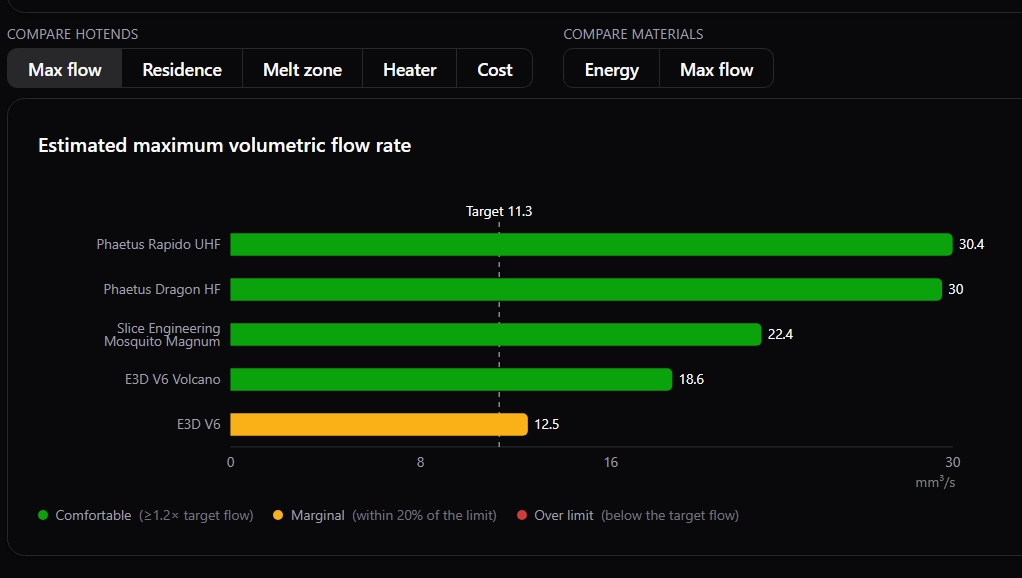
MeltCalc serves a straightforward purpose: it compiles information about hot ends and materials, detailing key attributes such as maximum flow rates, print speeds, and heater specifications. If you’re ever in doubt about whether a certain hot end can effectively handle a specific filament at a determined flow rate, this tool is an invaluable resource. It currently includes data on 64 different hot ends and 36 common polymers used in 3D printing, offering flow rate insights and print speed estimates, factoring in advanced technologies like Core Heating Technology (CHT) nozzles. Notably, the database relies on thermodynamic modeling based on Samples’ expertise as a chemist focusing on polymers. His goal was to furnish users with realistic flow rates for hot ends, moving beyond the often overly optimistic claims found in marketing materials.
For those interested in exploring the underlying code and modeling further, the project’s source code is accessible on GitHub. Recent content on 3D printing hacks, including techniques for achieving wave overhangs, has also been highlighted. If you have your own innovative 3D printing tools, feel free to share them with the community.