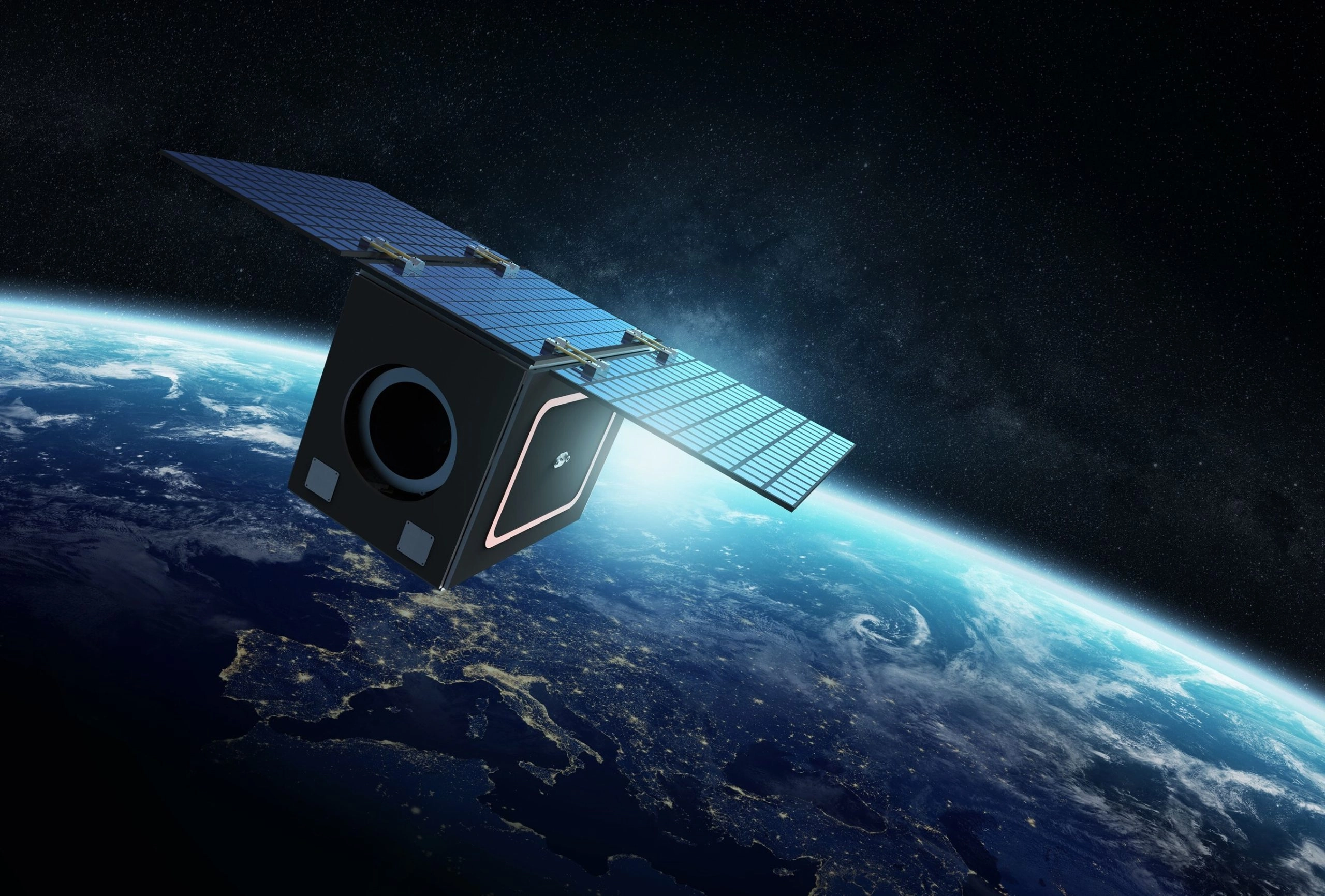
Boeing has announced its venture into 3D printing structural panels for satellite solar arrays, a move aimed at accelerating production and keeping pace with increasing demand for quicker spacecraft deployment. The first of these 3D-printed solar arrays will be utilized in small satellites manufactured by Millennium Space Systems, another company under Boeing’s Space Mission Systems division.
Typically, the production of solar array substrates, which are crucial for holding solar cells in place and maintaining their alignment in space, can take weeks due to the reliance on composite panels and extensive manual labor. However, Boeing’s new additive manufacturing process will slash this production time by up to 50%, reducing it to about six months from printing to final assembly.
This innovative method allows for the printing of structural elements and integrated features directly into the substrates, enabling parallel assembly with solar cell production. The incorporation of robot-assisted assembly and automated inspection at Spectrolab is expected to further enhance speed and consistency, minimizing labor-intensive processes.
Boeing foresees this approach not just being suitable for small satellites, but also scalable to its larger spacecraft platforms, with the goal of market availability by 2026. Melissa Orme, vice president of materials and structures at Boeing Technology Innovation, expressed confidence in the potential of combining qualified materials with advanced manufacturing techniques to deliver lighter structures and innovative designs across various programs.
As part of its strategy to streamline production rates, Boeing has already integrated over 150,000 3D-printed components in its systems, which includes significant elements on the Wideband Global Satcom military satellites. While 3D printing has been effectively utilized for smaller components, the substrates for solar arrays present unique challenges as they must balance low weight, rigidity, and thermal stability while withstanding the stresses of launch and orbit.
For further information, you can visit Boeing’s official site and Spectrolab.