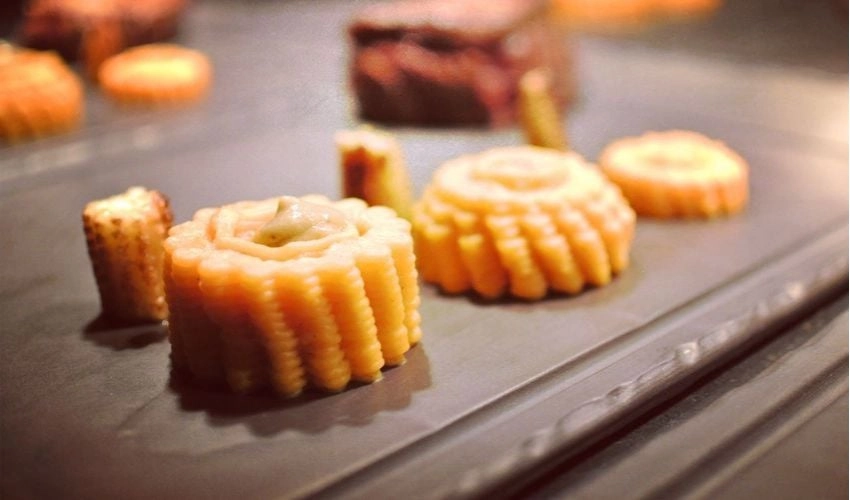
3D food printing originated in 2006 with the Fab@Home printer created by Cornell University, capable of handling materials like chocolate, cookie dough, and cheese. Over the years, this technology has evolved significantly, addressing challenges such as food waste, sustainability, and personalized nutrition. Utilizing a layer-by-layer method, much like traditional 3D printing, the process mainly employs extrusion, although alternative methods using powdered ingredients have also emerged.
While some may view 3D-printed food as artificial or overly processed, industry experts see it as an innovative tool comparable to conventional kitchen appliances. The outcome is heavily influenced by the quality and type of ingredients used. Here are seven compelling reasons that highlight the relevance of 3D printing in the food sector:
1: Unleashing Creativity in Haute Cuisine and Pastry Making
3D printing promotes creativity in culinary presentations, enabling chefs to create intricate shapes and layered structures that are challenging to achieve by hand. This technology significantly reduces the time required for complex decorations in pastry making. For instance, the French startup La Pâtisserie Numérique has developed a printer that produces various desserts without molds, letting chefs spend more time innovating.
2: Personalized Nutrition
As consumer preferences vary, food manufacturers have historically offered versions of products labeled “gluten-free” or “sugar-free.” With 3D printing, it’s possible to fine-tune the nutritional content of individual servings, allowing tailored options for diabetic patients, athletes, or individuals with food intolerances.
3: 3D-Printed Meat
With increasing global protein demand, 3D printing offers flexibility with raw materials. This technology can use cultured meat cells, plant proteins, and fungi-based proteins. Companies like Redefine Meat and Revo Foods leverage this versatility to craft 3D-printed meat alternatives tailored to different dietary needs.
4: Making Meals Safe for People with Dysphagia
Dysphagia affects many, particularly the elderly, making eating a challenge. Traditional pureed diets lack visual appeal. 3D food printers can create dishes that look appetizing while being easier to swallow. Gastronology, a Dutch startup, prints vegetables that maintain their appearance but offer a texture suitable for safe consumption.
5: Reducing the Environmental Footprint of Production
Food production significantly contributes to greenhouse gas emissions. While 3D printing alone won’t solve this dilemma, it can help mitigate some underlying issues. The Spanish company Cocuus exemplifies this by utilizing plant-based printing to produce items equivalent to vast amounts of traditional meat production, showcasing the potential for reduced environmental impact.
6: Opening Avenues for Food Research
3D food printing serves as a valuable research platform in academic settings, enabling experimentation with unconventional ingredients to develop solutions for underserved populations. The 3DGood project at the Polytechnic University of Valencia, for example, aims to utilize agricultural byproducts for nutritional purposes, resulting in innovative edibles.
7: Supplying Food in Extreme Environments
In space travel, meal preparation can be complex due to weight constraints and specific nutritional needs. NASA has explored 3D printing as a potential solution, including a project with Beehex that converts plastic waste into edible food by using modified bacteria to break down the plastic and create biomass suitable for printing.
Although 3D food printing may not grab headlines as it once did, it has gained stability within the food industry. Continuous developments from companies such as Revo Foods and Cocuus indicate a maturation of the technology, potentially reshaping our culinary future in meaningful ways.
For more information on 3D food printing, visit Natural Machines or check out NASA’s groundbreaking projects with edible food production.