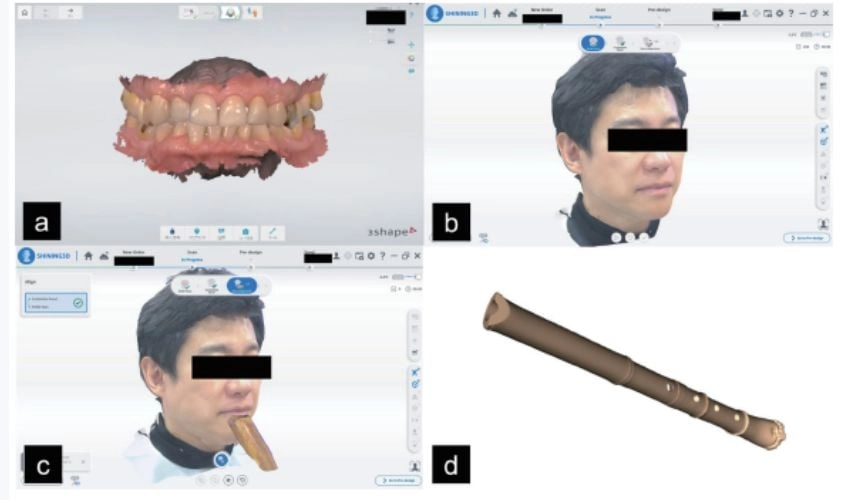
Researchers at the Institute of Science Tokyo have developed a 3D-printed guide designed to assist beginners in learning how to play the shakuhachi, a traditional Japanese flute. This innovative device addresses the challenges new players face in mastering the instrument, particularly the coordination required between lip shape, breath angle, and instrument positioning.
The project aimed to explore the potential of a prosthodontic digital guide workflow for applications beyond traditional use. By scanning an experienced player’s embouchure, the researchers created a digital representation of the spacing and alignment needed when playing. They designed a spherical clay model, which was then transformed into a light, hollow guide using stereolithography techniques. The final product is biocompatible, allowing for effective sterilization.
When tested by an expert musician, the guide demonstrated a high level of stability and usability, suggesting its effectiveness in enhancing the learning process. Assistant Professor Tamaki Hada affirms that the principles behind this device could be further applied to fields such as maxillofacial prosthetics and orofacial rehabilitation.
For more detailed insights into this study, you can read it here.