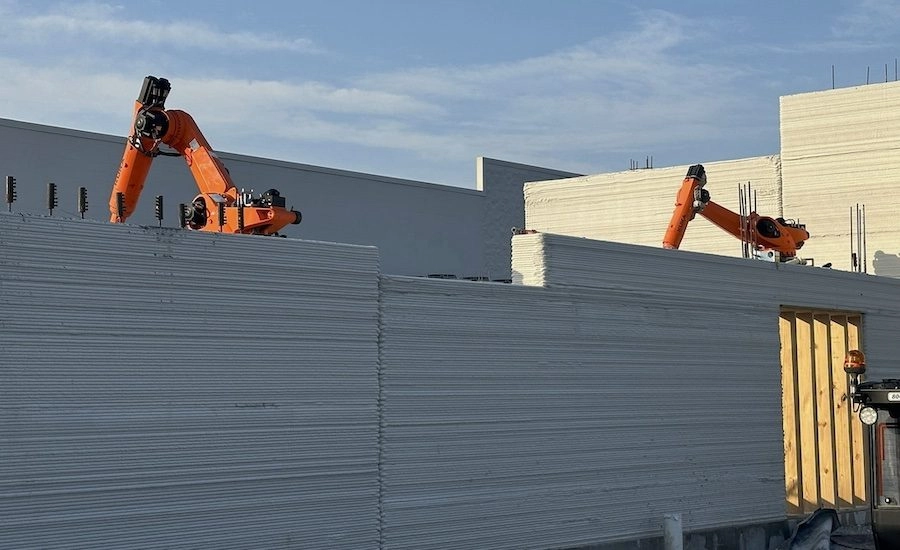
Walmart is making strides in the construction sector by partnering with Alquist 3D to introduce 3D-printed buildings across the U.S. This initiative signifies a pronounced shift toward integrating advanced technologies in retail infrastructure. The collaboration will feature the construction of more than a dozen buildings, beginning with a project in Lamar, Mississippi, slated for this month. This venture marks Alquist’s third engagement with Walmart, having successfully completed two previous projects.
The first building, an 8,000-square-foot addition in Athens, Tennessee, was notable for being the largest structure of its kind at the time. Patrick Callahan, CEO of Alquist 3D, noted the challenges faced during this pioneering project, which provided vital learning experiences for both Alquist and its general contractor partner. The second project, a smaller 5,000-square-foot structure in Owens Crossroads, Alabama, demonstrated significant efficiency, completing in just seven days with a minimal workforce, showcasing the time-saving potential of 3D printing in construction.
Alquist is distinct from other 3D printing firms that may face logistical limitations as it plans to operate on a national scale. The company equips contractors with advanced six-axis robotic arms utilized for printing concrete structures. These robots, designed for easy transport and setup, not only streamline the construction process but also allow multiple units to operate simultaneously on the same design.
The collaboration with Atlanta-based contractor FMGI and equipment rental service Hugg & Haul aims to enhance operational efficiency. By leveraging local resources for maintenance and support, Alquist is poised to tackle one of the main obstacles to scaling up 3D printing operations. This partnership approach enables quicker project deliveries and builds momentum for larger scale implementations across Walmart’s Supercenters.
Callahan emphasizes Alquist’s focus on technology development, fostering partnerships with suppliers, and providing training to contractors. This flexibility in business model—offering equipment for sale, lease, or rental—ensures adaptability based on demand and operational needs. The expected outcome is not only to meet the current retail infrastructure requirements but also to revolutionize traditional construction methods, ultimately transforming how large-scale building projects are executed.