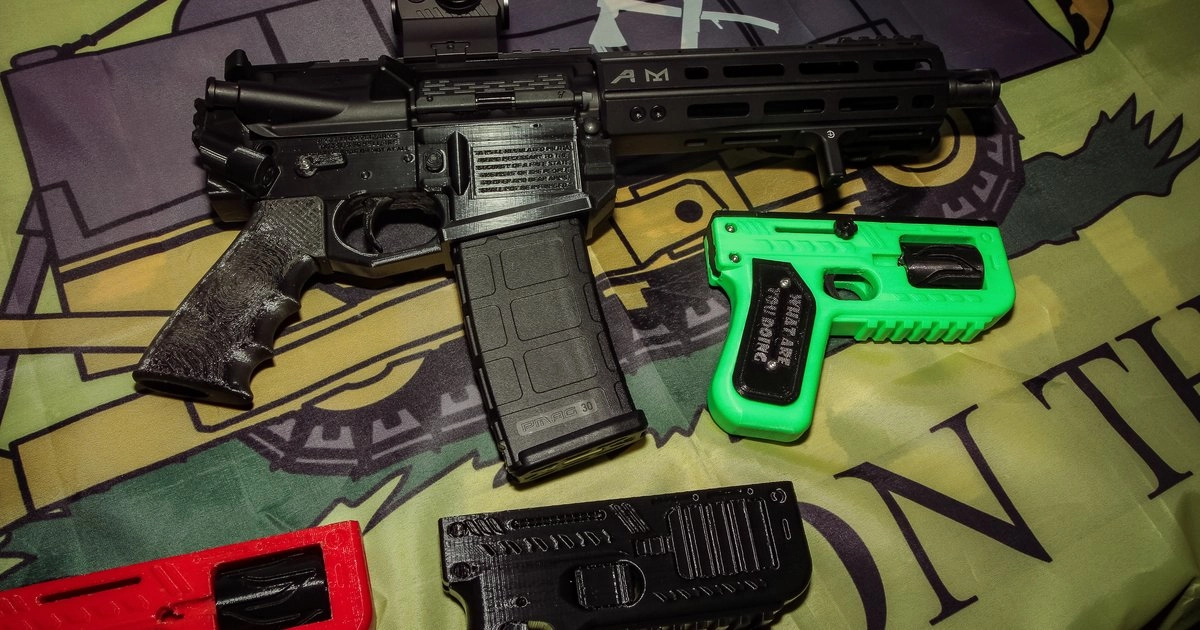
Police are currently investigating the shooting of UnitedHealthcare CEO Brian Thompson, which occurred on December 4, 2024. The suspected shooter utilized a 3D-printed gun, spotlighting a significant challenge for law enforcement as they grapple with the rising prevalence of these untraceable firearms, commonly referred to as "ghost guns."
The term "ghost guns" refers to firearms that can be made partially or entirely using components produced on commercially available 3D printers. Recent court discussions have highlighted ongoing debates regarding federal regulations governing these weapons. As the technology advances, it makes it increasingly difficult for authorities to monitor and regulate these firearms effectively.
From 2017 to 2021, U.S. law enforcement agencies reported almost 38,000 suspected ghost guns, marking a troubling escalation in their use in criminal activity. The Bureau of Alcohol, Tobacco, Firearms and Explosives reported that in 2021 alone, 19,273 ghost guns were traced, a significant uptick from prior years. New York State witnessed a substantial rise in the seizure of 3D-printed firearms, jumping from 100 in 2019 to 637 in 2022.
Arrests associated with 3D-printed guns are also on the rise. In the first half of 2023, there were 108 arrests, contrasting with 66 in all of 2022. North America remains the epicenter for this issue, accounting for 36% of global arrests related to 3D-printed firearms.
The emergence of these weapons poses a substantial security threat as they’re increasingly linked to violent groups, including far-right extremists, organized crime, and various militant factions. At least nine documented cases from 2019 to mid-2022 noted connections to extremists manufacturing or attempting to manufacture firearms through 3D printing.
Globally, approaches to regulation vary considerably. Countries like Japan enforce strict bans on the production of firearms, while Canada has introduced effective legislation banning ghost guns outright. In the United States, however, the regulatory landscape is complicated by constitutional considerations surrounding Second Amendment rights and First Amendment protections related to the dissemination of digital files containing firearm designs.
Many state governments are stepping up efforts to regulate ghost guns. As of late 2024, 15 states had implemented some form of regulation regarding the manufacture and possession of these firearms. Regulations typically involve serial number requirements and background checks during the purchase of firearm components.
In summary, as 3D printing technology continues to evolve, it presents escalating challenges for law enforcement and public safety, necessitating timely and effective regulatory responses.