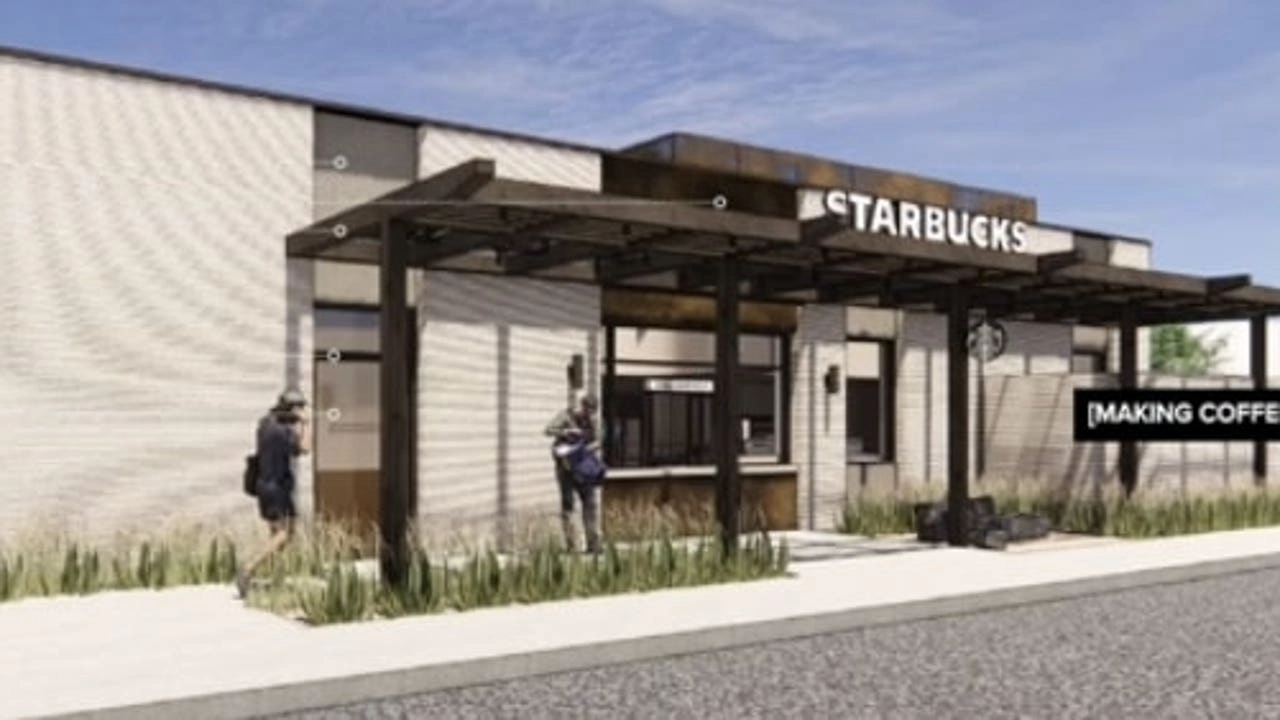
A new Starbucks store in Brownsville, Texas, is making headlines for being the brand’s first 3D-printed location in the United States. Set to open as a drive-thru-only establishment, the store features distinctive walls created using a robotic arm that layers concrete, a technique typically associated with residential construction rather than retail spaces.
While Starbucks has not elaborated on future plans for 3D-printed stores, it confirmed this innovative location is a significant first for the brand in the U.S. The building method, which reduces manual labor, has gained traction in various construction fields but remains rare in commercial retail settings. Experts in the industry view Starbucks’ venture into 3D printing as indicative of a growing interest in new construction technologies.
The reason behind choosing Brownsville, a city of approximately 190,000, remains unclear, though Starbucks has several existing locations in the area. Local residents, like Faviola Maldonado, have expressed fascination with the cutting-edge design as they observed the store’s construction.
Despite 3D printing currently costing more than traditional building techniques, proponents believe the advantages of speed, labor efficiency, and scalability could make it economical over time. Andrew McCoy from Virginia Tech highlighted the rapid advancements in technology, suggesting that it may become easier to use and more accessible for retail applications.
As ongoing labor shortages and material costs affect the construction industry, the success of Starbucks’ 3D-printed location could signal a new direction for smaller-format retail stores—whether this becomes a widespread trend or remains an isolated case is yet to be seen.