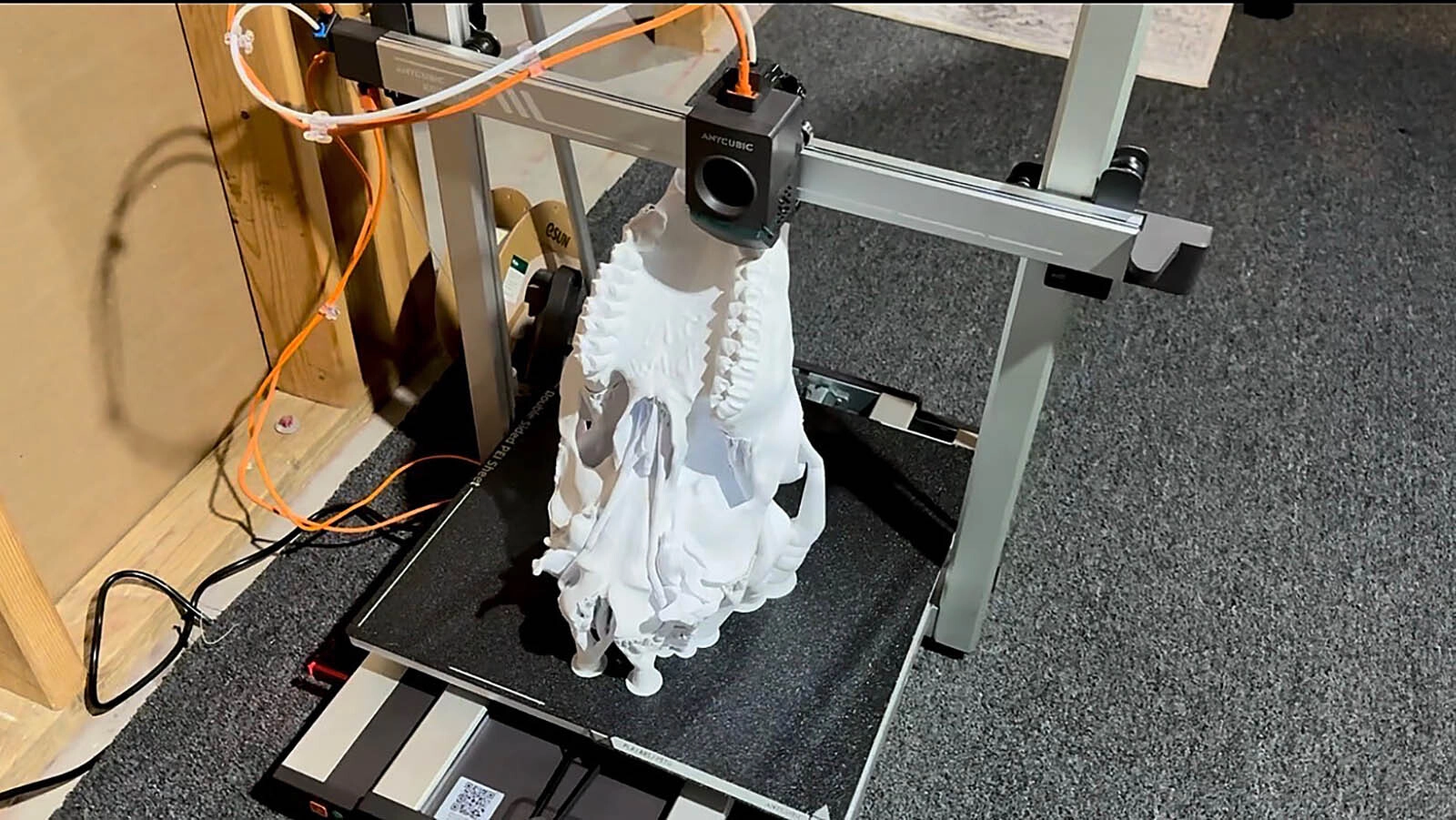
3D printing technology has made its way into the hunting world, offering hunters an innovative option for mounting trophy antlers and horns. Shawn Sanchez, a Utah hunter, has recently launched a venture called Buck N Bull Skulls that focuses on 3D-printed big game skulls, allowing hunters to save time and effort in the skull preparation process.
Traditionally, a hunter would have to boil the animal’s skinned head for hours or find a professional who uses carnivorous beetles to clean the skull. However, Sanchez’s 3D-printed skulls are designed to bypass these labor-intensive processes, which typically involve creating European mounts — a type of trophy mount that displays only the stripped and bleached skull with antlers attached.
After undergoing back surgery, Sanchez began brainstorming ways to earn income during his recovery. He collaborated with a friend who specializes in 3D design to create these skulls tailored for hunters. He saw firsthand the difficulties in preparing natural skull mounts, which are also prone to yellowing over time or breaking. Additionally, hunters occasionally damage skulls in the field, especially in cases of rare headshots.
Sánchez’s 3D-printed skulls are based on scans of real animal skulls, ensuring a robust yet accurate representation. The printing process varies depending on the species: deer skulls take around 11 hours to print, while elk skulls can take up to 50 hours. Currently, Sanchez offers options for pronghorn, elk, and various deer species, including mule and white-tailed deer. He is also exploring the possibility of producing skulls for bighorn sheep and mountain goats.
Sanchez is also developing mock-ups for Shiras moose skulls, a smaller species native to the southern regions of moose habitats. However, he notes that Alaskan moose skulls are impractically large for his 3D printer.
Crucially, Sanchez has designed a secure way to attach antlers to the printed skulls through an adjustable spline system, addressing concerns about stability and safety in home displays.
The response from hunters has been mixed. Some, like Adam Ashmore from Hartville, see the practical benefits of 3D-printed skulls for shed antlers or replacing damaged natural skulls. Others, like Alex Maher from Jackson, prefer traditional mounts, especially for significant trophies filed with organizations like Boone and Crockett.
As 3D printing continues to advance, innovations like Sanchez’s could reshape how hunters display their prized catches, offering options that are less time-consuming and more accessible than ever before.