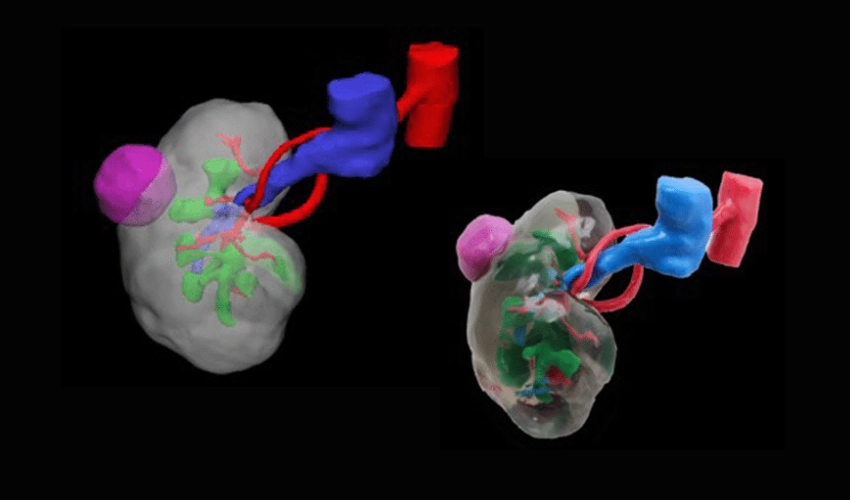
Researchers at Tsinghua University have made a significant breakthrough in renal cancer research by developing a method to bioprint kidney tumors using patients’ own cells. This innovative approach creates a highly realistic model of tumors that mirrors the complex environment found within the human body.
Published in the journal Biofabrication, their study details how this bioprinting technique combines tumor cells with supportive cell types and can produce structures akin to blood vessels. The resulting printed tumors, known as organoids, retain the distinct characteristics of a patient’s cancer, offering a more precise tool for research and treatment testing compared to traditional lab models.
As kidney cancer, particularly renal cell carcinoma (RCC), continues to rise, effective treatment options remain limited. Patients often respond differently to chemotherapy and targeted therapies, and tumors can mutate over time, leading to drug resistance. Conventional laboratory models frequently fail to capture how tumors behave in vivo, complicating the identification of effective solutions.
The team’s targeted bioprinting technique aims to fill these gaps. The organoids reflect the original tumor’s genetic and structural traits, allowing for the testing of various therapies in a controlled laboratory environment. This method also streamlines the evaluation process, minimizing dependence on time-consuming manual techniques.
Dr. Yuan Pang, a co-author of the study, expressed that this new method could markedly enhance the study of kidney cancer and facilitate the development of personalized treatments. The rapid generation of organoids will expedite finding optimal therapies for individual patients, ideally improving survival rates and inspiring the creation of new treatments.
This research underscores the potential of additive manufacturing in healthcare, moving beyond traditional industrial applications to make a direct impact on patient outcomes. As advancements in bioprinting technology continue, the ability to create organoids from patient cells may become an essential component of kidney cancer treatment strategies.
For further insights on 3D printing in medical applications, you can visit this dedicated page.