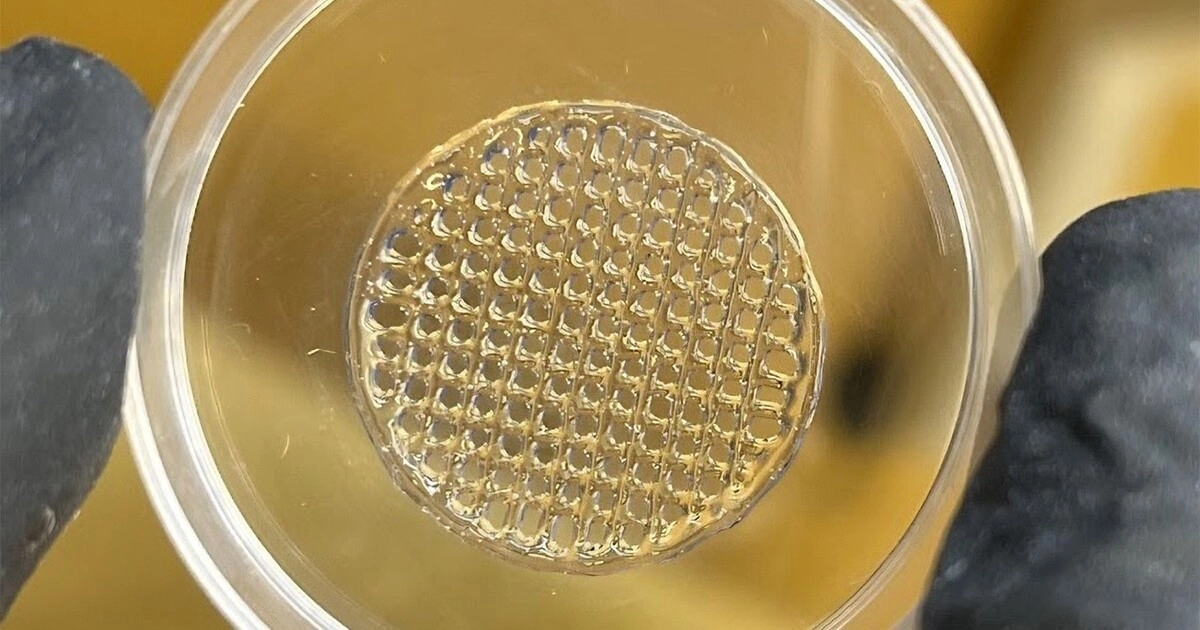
Research from Graz University of Technology in Austria and Vellore Institute of Technology in India has led to the development of a method to 3D print skin-like structures that could replace animal testing in the cosmetics industry. This advancement comes at a time when many countries are working to phase out animal testing, though significant regulatory hurdles still exist.
The team has created a hydrogel-based printing technique that incorporates living skin cells, allowing the structures to eventually form tissue suitable for testing cosmetic products. Hydrogels serve as a synthetic medium to provide a flexible, water-rich environment that supports cell growth and division. However, the challenge lies in ensuring that these hydrogels maintain chemical and mechanical stability during the 3D printing process.
Researchers in Austria focus on creating the optimal hydrogel formulations, while their counterparts in India conduct tests on the toxicity and resistance of the printed structures. It takes about two to three weeks for these structures to mature into functional skin tissue, which mimics the layered biological composition and physical properties of human skin.
Once this initial testing phase is completed, the team plans to use their first batch of skin models for nanoparticle testing. If their technique proves successful, it could open the door for a variety of cosmetic testing applications.
Notably, this isn’t the first initiative to create viable alternatives for cosmetics testing. Cosmetics company L’Oreal has developed their own method to reconstruct skin for testing, known as Episkin, and has been offering this service to other companies for several years, attempting to improve animal welfare in the industry.
For further details, you can explore L’Oreal’s advancements in skin technology here.