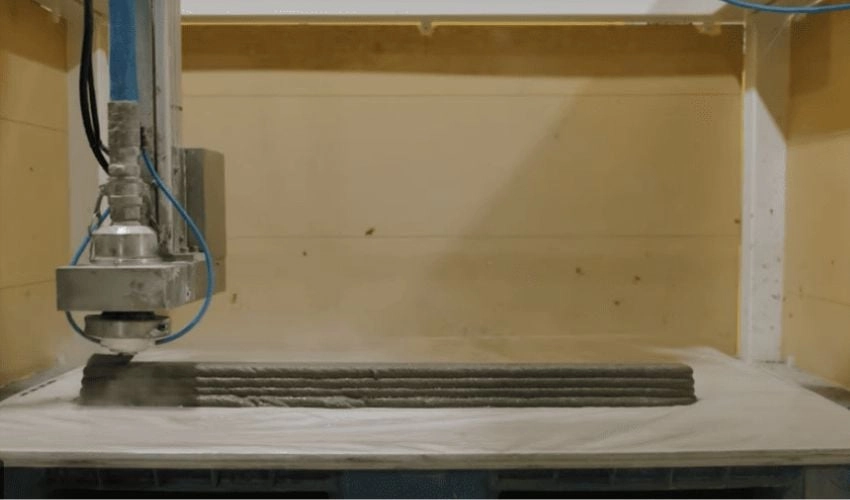
3D printing is making significant strides in the construction industry, with a notable project emerging from Nanyang Technological University (NTU Singapore). Researchers there have introduced an innovative concrete 3D printing technique that effectively captures carbon, potentially transforming the ecological impact of construction practices.
This method builds upon recent advancements, such as the concrete formula developed by the University of Virginia, which aimed to reduce carbon emissions by 31%. The NTU team’s technique is particularly promising, targeting the environmental challenges posed by cement production, a process responsible for approximately eight percent of global CO2 emissions. By enhancing material utilization, expediting construction processes, and minimizing labor needs, this new approach seeks to mitigate reliance on traditional reinforced concrete structures.
The study, featured in the Carbon Capture Science & Technology journal, outlines a system where the 3D printer is directly linked to CO2 pumps and steam jets. During the printing phase, CO2 is integrated into the concrete mix, bonding permanently to the structure, while steam boosts the concrete’s capacity to absorb CO2, resulting in a stronger material.
Professor Tan Ming Jen from NTU emphasized the significance of lowering greenhouse gas emissions within an industry notorious for pollution. He stated that their new concrete printing approach offers not just an environmentally friendlier alternative but also enhances the mechanical properties of concrete. The method aims to utilize CO2 produced by power plants and other industrial sources, effectively recycling greenhouse gases back into construction materials.
Testing has revealed that the new printing technique yields concrete with superior strength and durability—capable of bearing 37 percent more weight and bending nearly 45 percent further than traditional methods. Additionally, it captures 38 percent more CO2, enhancing its eco-friendliness. Moving forward, the researchers intend to refine their technique further and explore the possibility of using recycled industrial gases for the 3D printing process.
For more information about advancements in concrete 3D printing and its environmental benefits, visit links about the ongoing efforts in this domain, including additional studies and industry applications.