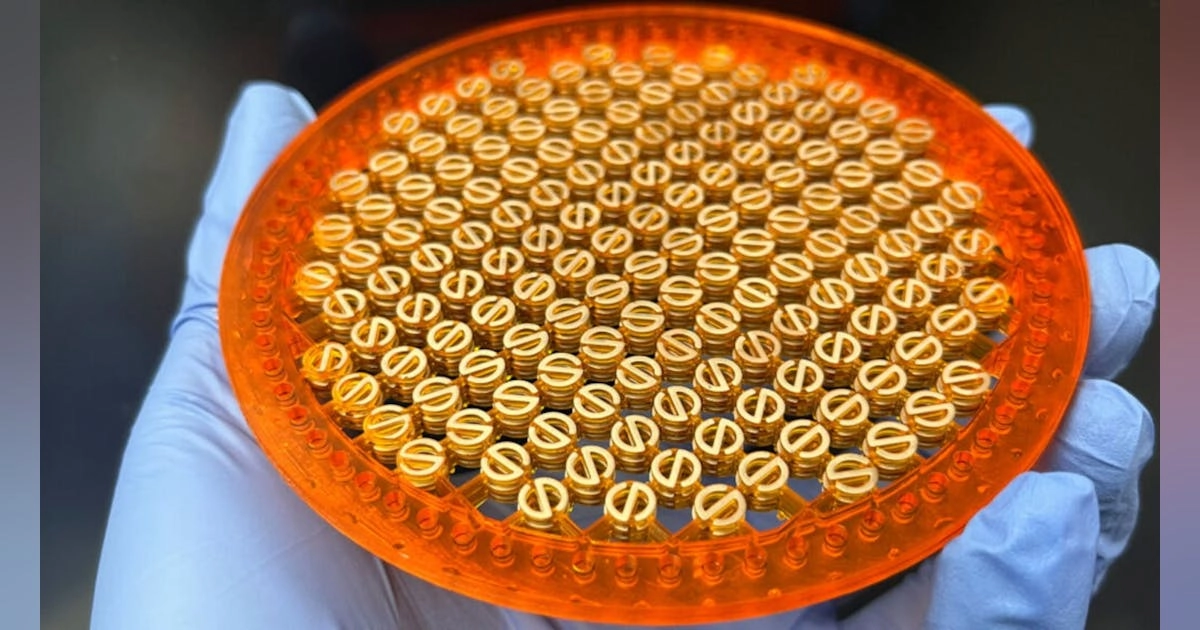
Researchers at the University of California at Berkeley have unveiled a groundbreaking approach to 3D printing antennas, allowing them to create high-performance, lightweight RF structures that were previously considered "unbuildable." This innovative method, known as charge programmed deposition multi-material 3D printing (CPD), merges dielectrics with patterned conductors to fabricate intricate antenna designs with unprecedented flexibility.
Traditional additive manufacturing techniques have established a foothold in creating custom antennas and RF devices, yet challenges remain in terms of material integration and dimensional accuracy. The CPD platform addresses these constraints, providing a universal system capable of rapid production for almost any 3D antenna design.
The CPD technique leverages a desktop digital-light 3D printer combined with a catalytic technology that enables precise metal plating on selectively patterned polymers. This approach effectively allows multiple materials to be integrated into complex 3D structures without the burdens associated with traditional manufacturing techniques.
Two standout examples of this new technology include:
-
Ultra-light Circularly Polarized Transmitarray Antenna: The researchers designed a 19-GHz transmitarray antenna using the CPD process, optimizing it to minimize material usage and weight. The new antenna utilizes conductive S-ring elements configured to achieve operational efficiency through phase control—a significant advancement over conventional designs that require heavier, bulky components.
-
Lightweight Horn Antenna: They also produced a 19-GHz horn antenna weighing just 12 grams. This was made possible by applying a thin layer of copper only on the interior surfaces, as opposed to using solid metal throughout the structure. The design maximizes mechanical strength while minimizing weight, showcasing the potential of CPD for future antenna designs.
The research demonstrates that CPD not only improves antenna fabrication but also significantly reduces weight—with savings of up to 90%. The details of this groundbreaking study can be found in their paper, "Ultra-light antennas via charge programmed deposition additive manufacturing," published in Nature Communications.
For further reading, you can access the full study here.