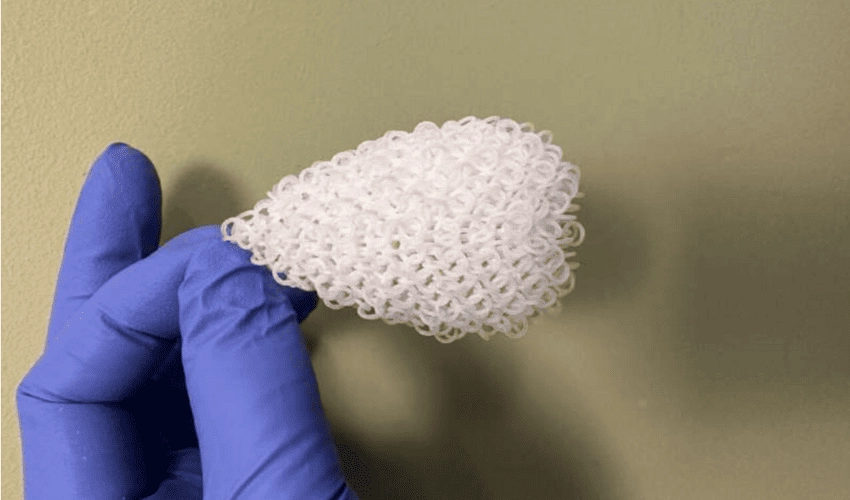
Recent advancements in materials science have led to innovative solutions in architecture and design. A team of researchers from the California Institute of Technology (Caltech), in collaboration with Lawrence Livermore National Laboratory and Princeton University, has developed polycatenated architected materials (PAMs). These materials are capable of interweaving to form unique 3D structures, making them suitable for various sectors, including engineering and design.
PAMs are not classified as granular or crystalline; they can exist in both fluid and solid states depending on the stress applied. Utilizing 3D printing technology allows the creation of PAM structures, such as rings and hexagons, with high precision. This capability opens a wide array of applications, from architectural projects to materials ideal for space missions that require flexibility and weight reduction.
The researchers conducted experiments on various assembly methods for PAMs, uncovering intriguing properties. Some structures exhibited the ability to remain flexible like liquid under normal conditions but hardened upon the application of pressure. Others demonstrated repulsive properties, allowing them to contract or bend similarly to muscle tissue once connected.
Explorations into futuristic applications indicate potential in creating adaptable materials for space, which are critical for reducing the weight of structures in space missions. For more detailed information, you can access the published study here.
What are your thoughts on these innovative PAMs? Share your views through comments or engage with us on our LinkedIn, Facebook, and Twitter pages!