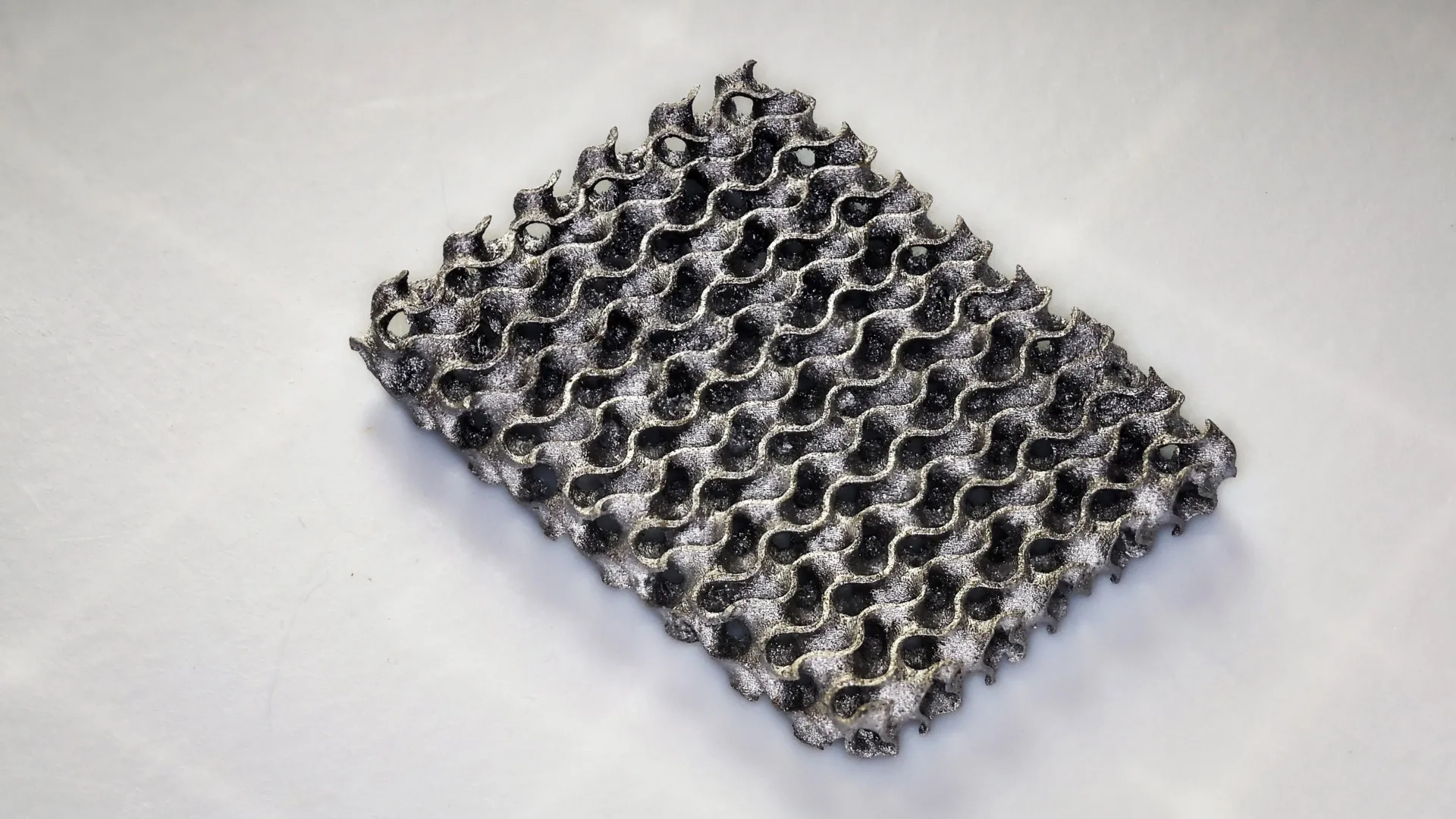
Scientists at the École Polytechnique Fédérale de Lausanne (EPFL) have achieved a groundbreaking innovation in 3D printing, transforming simple hydrogels into high-performance metals and ceramics. This new process enables the creation of dense, high-strength structures without the porosity that has hindered traditional methods, yielding materials that are 20 times stronger and experience significantly less shrinkage during production.
Current 3D printing techniques, particularly vat photopolymerization, rely on light-reactive resins that are limited to polymers. While some researchers have attempted to convert these polymers into stronger materials, these methods often result in porous and warped end products due to excessive shrinkage. Daryl Yee, who leads EPFL’s Laboratory for the Chemistry of Materials and Manufacturing, emphasizes that these shortcomings motivated their innovative approach.
Yee’s team has developed a method where they first 3D print a framework using a water-based gel. They then infuse this structure with metal salts, which chemically convert into nanoparticles that distribute throughout the gel. This infusion process is repeated multiple times to enhance the metal content before the hydrogel is removed through heating, leaving behind meticulously shaped metal or ceramic objects.
This technique allows for the production of complex shapes, such as intricate gyroids made from metals like iron, silver, and copper, demonstrating not only strength but also capability in crafting lightweight and complex 3D architectures. Their materials withstand up to 20 times more pressure compared to traditional methods, with much lower shrinkage rates (only about 20% versus previous methods which can see shrinkage rates of 60-90%).
This advancement is particularly promising for various applications, including the development of sensors, biomedical devices, and energy conversion tools. The researchers are focusing on refining their process to enhance material density and reduce production time, looking to automate infusion steps to increase efficiency.
For further reading, refer to their research published in Advanced Materials: Hydrogel‐Based Vat Photopolymerization of Ceramics and Metals with Low Shrinkages via Repeated Infusion Precipitation.