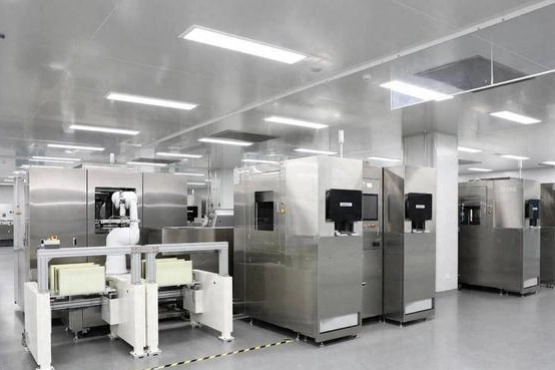
The world’s largest commercial 3D-printed pharmaceutical production facility is currently under development in Nanjing, Jiangsu province. When operational, this facility is expected to produce up to 300 million tablets annually.
Visiting Triastek’s facility located in the Jiangning high-tech zone reveals a stark difference from traditional assembly lines. Instead, the plant utilizes fully automated, digital 3D-printing devices that function similarly to paintbrushes on a three-dimensional canvas. These devices layer drug materials into pre-designed structures, crafting uniquely shaped tablets with more than 100,000 monitoring points.
In contrast to the complex processes involved in traditional tablet production—such as granulation, mixing, tableting, coating, and blister packaging—3D-printed drugs simplify the workflow to just three steps: blending and melting, printing, and packaging. This method enhances structural design, production efficiency, cost-effectiveness, and quality control. According to Deng Feihuang, Triastek’s vice-president of technology, 3D printing enables the creation of intricate internal structures, unlike traditional tablets which generally have solid blocks or basic layers.
Moreover, the 3D-printed tablets are designed for controlled drug release, minimizing fluctuations in blood drug concentration. They can also integrate a "positioning system" that targets specific parts of the gastrointestinal tract, optimizing therapeutic effects.
One significant advantage of 3D printing is the digitally controlled production process, which guarantees precise traceability for each tablet’s quality. Additionally, the development cycle is greatly reduced; processes that once took years can now be completed in just a few months.
Recently, Triastek received the first pharmaceutical production license for 3D-printed drugs in China from the Jiangsu Medical Products Administration. This milestone establishes Triastek as the second company globally, after Aprecia in the United States, to commercialize 3D-printed pharmaceuticals.
Triastek’s inaugural 3D-printed product, the anticoagulant Apixaban tablet (T20j), has successfully completed its pharmaceutical research and clinical trials. The company anticipates submitting a marketing application to the National Medical Products Administration’s Center for Drug Evaluation in September for approval.
Currently, Triastek is working on a second production line aimed at hormone drugs, which is expected to be finished by December this year, along with the second phase of their production facility. The company is also advancing over 10 3D-printed drug products currently in the early clinical trial phases.
The Jiangning high-tech zone also hosts several service institutions that help support pharmaceutical innovation, including the Nanjing branch of Jiangsu Medical Products Administration’s Review and Inspection Center and the Nanjing Institute for Food and Drug Control. This zone offers more than one million square meters of research and pilot-scale platforms, contributing to comprehensive support for biopharmaceutical companies like Triastek.
"The efficient service we provide is the result of coordinated support from various levels of provincial, municipal, and high-tech zone departments," noted Deng.