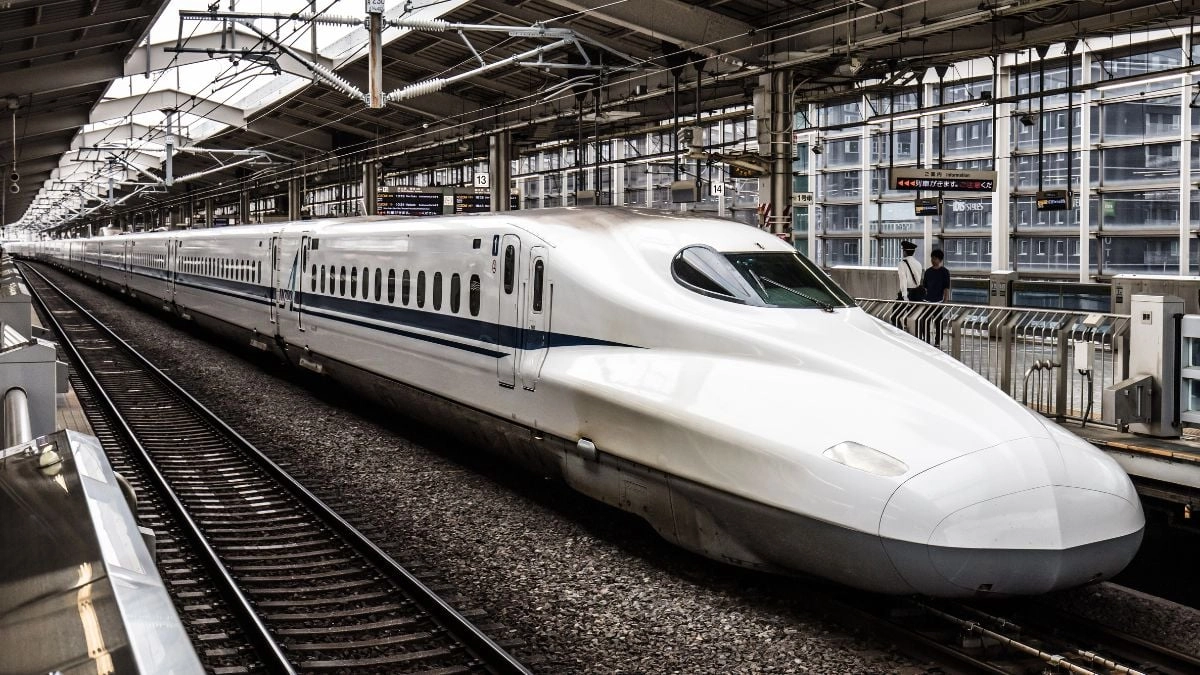
While Mexico waits for years to see railway projects completed, Japan has demonstrated remarkable efficiency in transportation infrastructure. A recent report highlighted that in Japan, a new train station was constructed within a few hours, showcasing the capabilities of 3D printing technology.
The Hatsushima Station, located in a rural area of Arida, Wakayama Prefecture, was built in a record timeframe from 11:57 p.m. to 5:45 a.m. This extraordinary project, completed during a short nightly break in train service, was deemed a “world first” by the West Japan Railway Company (JR West).
The innovative technology of 3D printing was key to this rapid construction. The station’s components were fabricated from specialized mortar at a facility in Kumamoto, over 800 kilometers away. The company Serendix, which focuses on 3D-printed habitable structures, manufactured and transported the station parts, enabling the swift assembly.
Documentation from the New York Times noted that the entire printing and concrete reinforcement process took only seven days. Afterward, the parts were transported by multiple trucks to Hatsushima. Local residents witnessed the assembly, as a crane positioned each pre-printed segment with precision. This new station will replace a wooden structure that had been in use since 1948.
Despite the small size of Hatsushima Station — just over nine square meters — it is a fully functional facility expected to serve about 530 passengers daily. Its opening is set for July, and its modern, minimalist design includes local icons from the Arida region. While some ticket machines and transportation card readers still need to be installed, the main structure is complete.
In contrast, Mexico’s railway projects often face severe delays attributable to bureaucracy and budget overruns. The Tren Maya, a significant megaproject endorsed by President Andrés Manuel López Obrador, has experienced consistent controversies and postponements since its initiation. Similarly, the Mexico-Toluca Interurban Train, which began construction in 2014, faced extensive delays, with a section only inaugurated in 2023, and the connection to Observatorio in Mexico City still under construction a decade later.
3D printing presents numerous advantages for public infrastructure, significantly reducing project execution times, costs, and waste. JR West estimates that constructing Hatsushima Station using traditional methods would have taken over two months at double the cost. Such efficiency gains are particularly vital for budget-conscious rural communities.