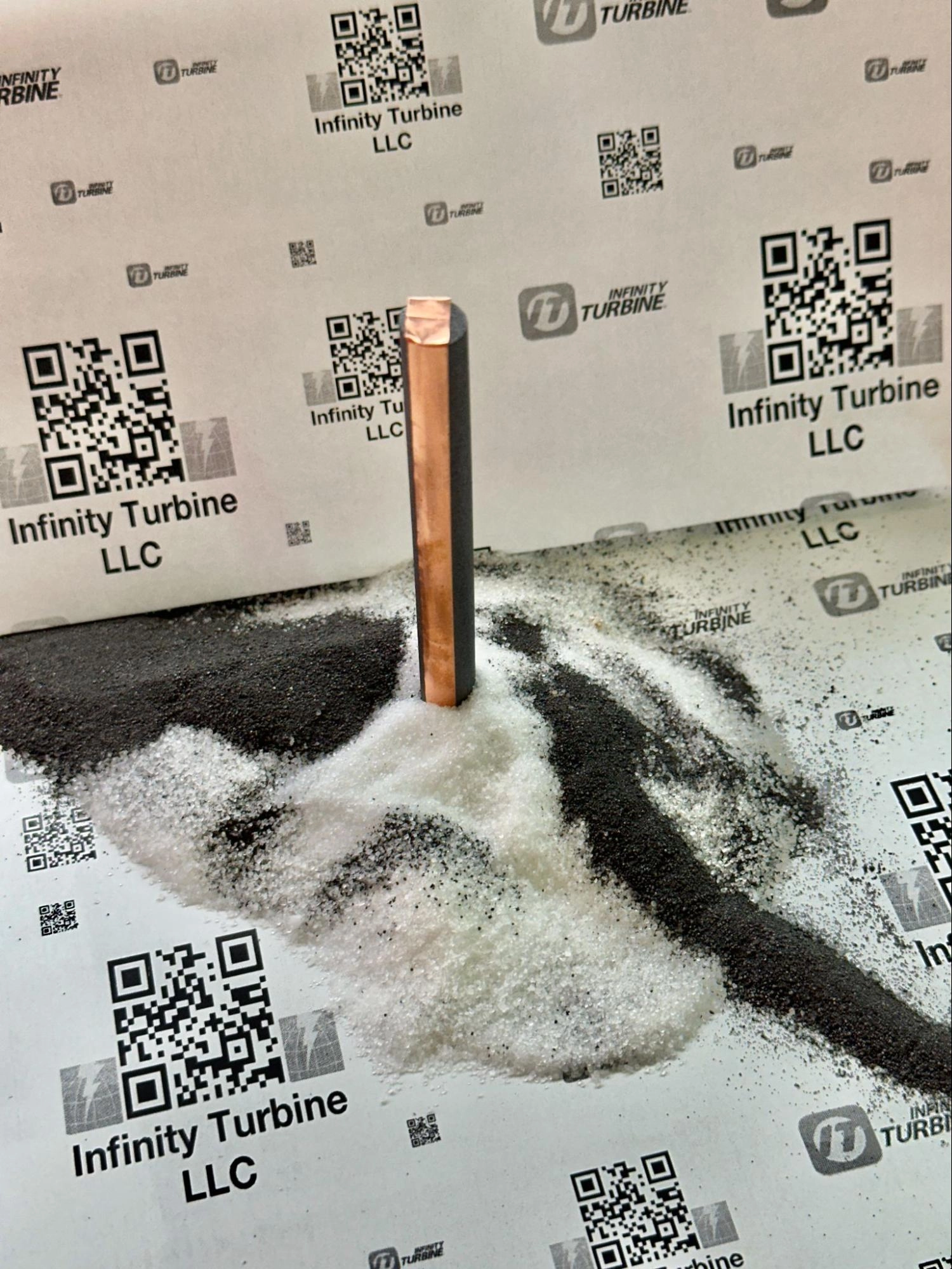
Infinity Turbine has unveiled an innovative method for creating electrodes that integrates fiber laser heat treatment, additive manufacturing, and laser-induced carbonization. This cutting-edge technology allows for the conversion of carbon-rich substances like sugar and wood fibers into durable carbon or graphene-like formations. The new 3D-printed electrodes are expected to revolutionize the production process for Salgenx saltwater flow batteries, gas processing, and electrocatalyst operations.
Known for its eco-friendly and secure solution for large-scale energy storage, the Salgenx saltwater flow battery gains significantly from the incorporation of 3D-printed carbon electrodes. These electrodes offer a structure that is both highly conductive and vast in surface area, elevating the battery’s functionality by promoting quicker ion exchange, enhancing energy density, and prolonging the battery’s life using renewable materials. Furthermore, this approach minimizes manufacturing durations and complexities through the employment of just-in-time technology, effectively reducing inventory expenses.
Infinity Turbine’s novel electrode technology introduces several pivotal enhancements boosting its effectiveness. By utilizing fiber lasers for carbonization in organic materials such as sugar, it transforms them into graphene-like carbon structures known for their superior conductivity and robustness. This carbonization takes place under a CO₂-rich atmosphere to boost carbonization efficacy while preventing combustion, ensuring production of high-purity carbon. The additive manufacturing stages construct the electrodes layer by layer, enabling customized shapes that improve surface area and mechanical durability, critical for elevated energy storage. Additionally, the technique employs just-in-time manufacturing to seamlessly incorporate various battery materials, facilitating quick assembly of components like metallic powders and insulators. This integration of carbonization, 3D printing, and versatility in materials aids in producing highly effective electrodes suited to the needs of energy storage and processing applications. It even permits the integration of mixed material layers beneficial in gas processing and electrocatalysis operations.
These 3D-printed electrodes will significantly enhance the efficacy of Salgenx’s saltwater batteries, renowned for their safety, affordability, and environmental friendliness. With improvements in charge times, energy capacity, and durability, this innovation is poised to boost the performance of renewable energy storage solutions.
The deployment of 3D-printed electrodes using selected powdered materials introduces new avenues for exploration and development. It enables a seamless transition from ideas to finished products, accelerating the path to market. Additionally, the process of 3D printing facilitates the creation of specialized machinery for electrode and electrocatalyst production, potentially revolutionizing manufacturing processes in ways akin to Tesla’s implementation of the Gigapress, facilitating the production of 3D-printed anodes and cathodes to complete electrolyzer cells.
The application of Infinity Turbine’s 3D-printed carbon frameworks extends beyond mere energy storage solutions. In gas processing, these frameworks could be utilized directly in operational settings, possibly improving carbon capture and conversion systems efficiency. The materials’ extensive surface area and conductivity, reminiscent of graphene, are especially advantageous for practices including the electro-desalination systems that transform seawater into potable water.
The concept of 3D construction is also optimal for uses involving electrocatalysts. Infinity Turbine’s setup allows for the incorporation of cutting-edge electrocatalyst technologies, aiding the transformation of CO₂ and water into valuable carbon-derived products such as methylglyoxal (C3) and 2,3-furandiol (C4), achieving more than 99% efficiency. These substances are highly promising for eco-friendly manufacturing, providing safer substitutes for industrial items such as plastics and adhesives, wherein methylglyoxal could serve as an alternative to formaldehyde.
Infinity Turbine has made a significant advancement by developing 3D-printed carbon electrodes, propelling forward the capabilities in energy storage and electrocatalyst technologies. These innovative carbon-based electrodes are poised to boost the performance of Salgenx’s saltwater batteries and revolutionize gas processing industries. The use of sustainable organic resources like sugar and wood fibers highlights Infinity Turbine’s dedication to eco-friendly production practices and the pursuit of clean energy technologies.
3D Systems recently highlighted a crucial achievement in the rollout of its Oqton Manufacturing OS. This system is crafted to facilitate manufacturing on demand, setting a new standard in production flexibility. read more »
In a joint effort, Stratasys Ltd. and Materialise have rolled out the Stratasys Neo Build Processor for Investment Casting. This new development aims to hasten the investment casting process, enabling more rapid production cycles. read more »
A pioneering manufacturing initiative spearheaded by Oak Ridge National Laboratory (ORNL) aims to rejuvenate American manufacturing. The program focuses on producing large metal components for various applications. read more »
At the 2024 Fall edition of Maison&Objet in Paris, the Hong Kong-based architectural firm LAAB premiered an eco-pavilion crafted from 3D-printed bricks made of… read more
The cold spray additive manufacturing company SPEE3D is set to introduce its new Expeditionary Manufacturing Unit (EMU) at the upcoming Land Forces expo, starting Wednesday… read more
Learn about the collaboration between Edser and HP in utilizing 3D printing technology to develop a scoliosis brace that offers enhanced customization and performance.
The contract manufacturer Endeavor 3D now proudly holds the International Traffic in Arms Registration (ITAR) status for its polymer and metal additive manufacturing services…. read more
Stratasys has unveiled the Origin Two DLP 3D printer along with its post-processing unit, Origin Cure, catering to the increasing need for high-quality, small-scale production…. read more »
K3D, a company from the Netherlands that focuses on metal additive manufacturing, has been chosen as the inaugural customer for the newest machine from Additive Industries, the MetalFab… read more »
The European Space Agency (ESA) has reached a significant achievement in space manufacturing by managing to 3D print the first metal part in space…. read more »