Most people might not be familiar with the term caustics, but it’s a phenomenon we encounter daily. It’s visible in the shimmering patterns of light at the bottom of pools or on reflective surfaces. However, these reflections could potentially transform the realm of 3D metal printing.
Caustics refer to the specific light patterns that emerge when light interacts with curved or reflective surfaces. These patterns aren’t random; they adhere to the principles of physics. Researchers at the US National Institute of Standards and Technology (NIST) are now leveraging these phenomena.
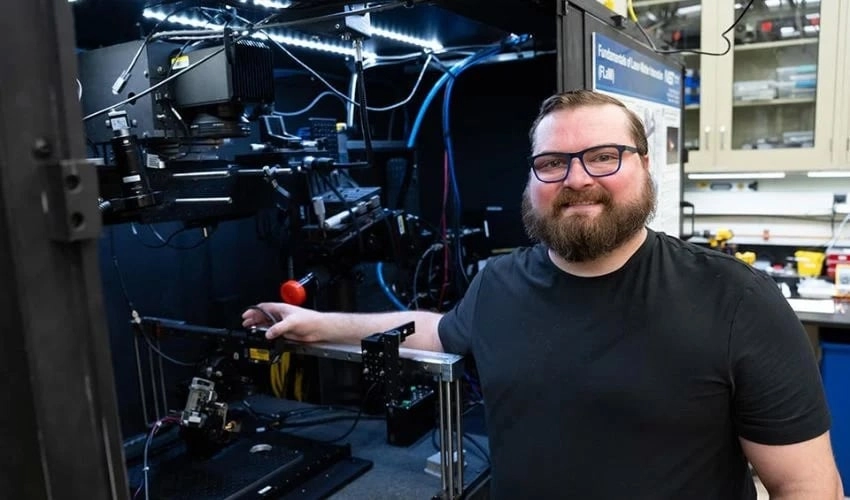
Although 3D metal printing is a precise technology, it still faces challenges. Minor discrepancies in temperature, material characteristics, or printer settings may result in "keyholes" during the printing process—microscopic voids that can seriously compromise a component’s structural integrity. David Deisenroth, a mechanical engineer at NIST, stated, “It would be very helpful to monitor how the print is going in real time… We want to adjust the printer to tackle these issues, leading to stronger and more consistent parts.”
Keyholes develop in mere milliseconds, meaning conventional error-detection methods frequently lag behind. Hence, the NIST team adopted an innovative approach, utilizing light reflections to monitor the printing process. By analyzing the caustics produced by the laser on the metal surface, they were able to identify subtle variations and pinpoint when and where a keyhole was forming.
To visualize these light reflections, researchers employed a specially coated hemisphere that acts like a mirror. The challenge was to create a coating that reflected the laser light appropriately; too many reflections would muddle the image, while too few would be unhelpful. Ultimately, the team found success with a simple hemisphere, initially intended as a decorative item, which enabled them to accurately capture the laser’s light patterns.
While this technology isn’t yet ready for broad industrial deployment, the researchers aim to incorporate a high-speed camera capable of capturing up to 825,000 frames per second, enhancing their ability to analyze laser reflections. This research indicates that caustics present a promising method for improving control over 3D metal printing. More details can be found here.
What are your thoughts on utilizing light reflections in 3D metal printing? Share your comments below or connect with us on LinkedIn or Facebook. Don’t forget to subscribe to our free weekly Newsletter for the latest 3D printing updates. You can also check out our videos on our YouTube channel.