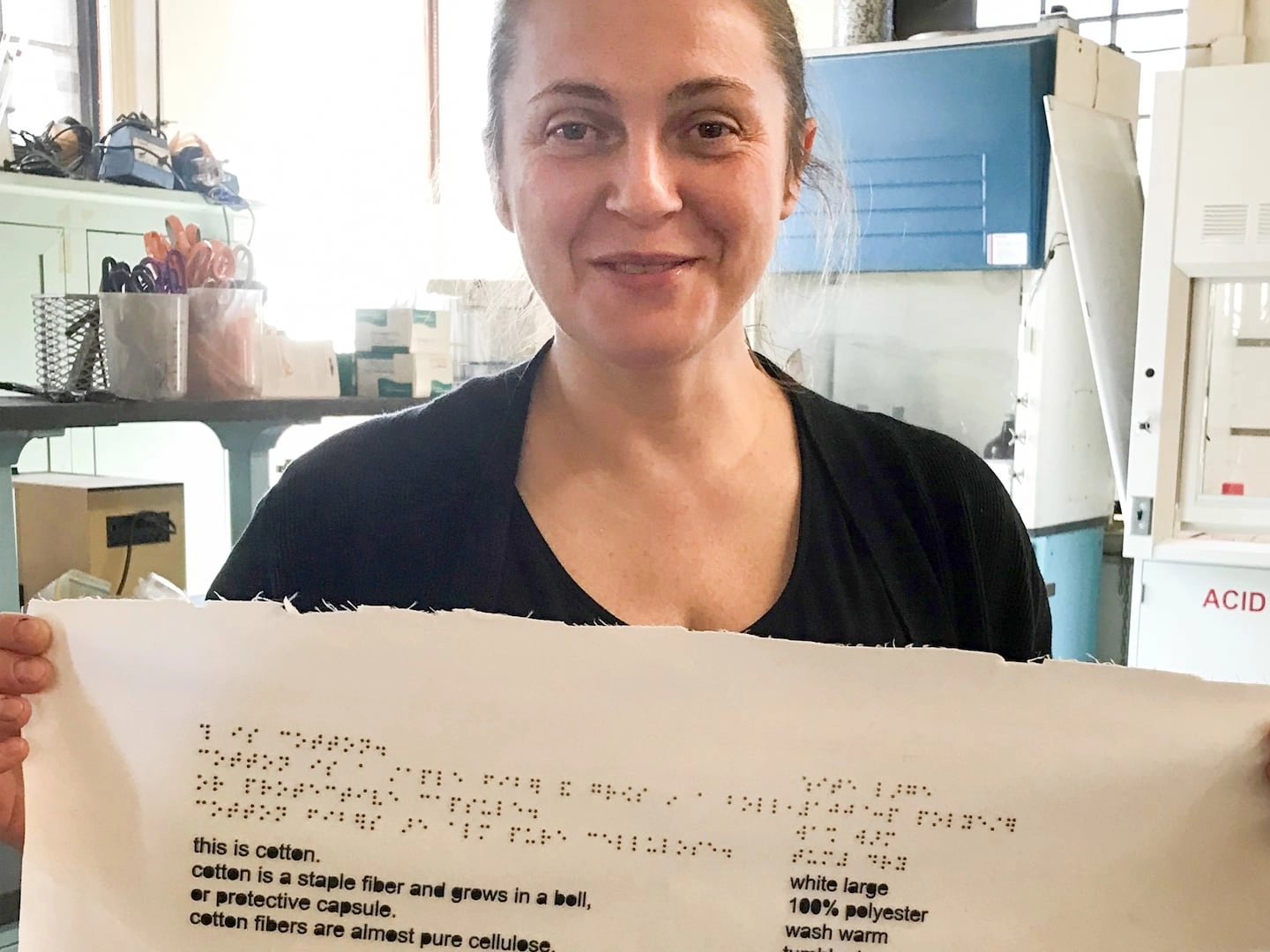
A professor at the University of Rhode Island, Izabela Ciesielska-Wrobel, is using 3D printing technology to enhance clothing accessibility for visually impaired and neurodivergent shoppers. By employing 3D polyjet printing, she aims to create tactile symbols on clothing that can assist those who struggle with traditional shopping.
Ciesielska-Wrobel’s focus is not on fashion design but on how her innovations can improve the shopping experience for individuals with specific needs. The intricate dots produced by the polyjet printer can be used to represent braille on clothing tags, empowering visually impaired shoppers to make informed decisions independently.
This technology also holds promise for the neurodivergent community. For instance, she envisions clothing with printed symbols that serve as calming fidgets, allowing users to manage stress while shopping.
Ciesielska-Wrobel has big plans for the future, seeking to include braille in clothing tags to enhance inclusivity. She believes that integrating braille would not substantially increase manufacturing costs, and additional symbols could provide valuable information about the clothing, such as its material composition.
In an effort to gauge the needs and perspectives of the visually impaired community, she conducted a survey that confirmed the ongoing challenges faced by these individuals in navigating clothing selections. This feedback will help her refine her designs.
The next step in her project involves printing braille samples on various clothing items and collecting feedback from visually impaired users to ensure the effectiveness and readability of her designs. Ciesielska-Wrobel is actively seeking sponsors for the costly printing technology needed, which exceeds $400,000, and is currently in talks with potential partners for funding.
She aims not just to target the visually impaired but to explore the broader implications of integrating 3D printing with textile design for diverse communities.