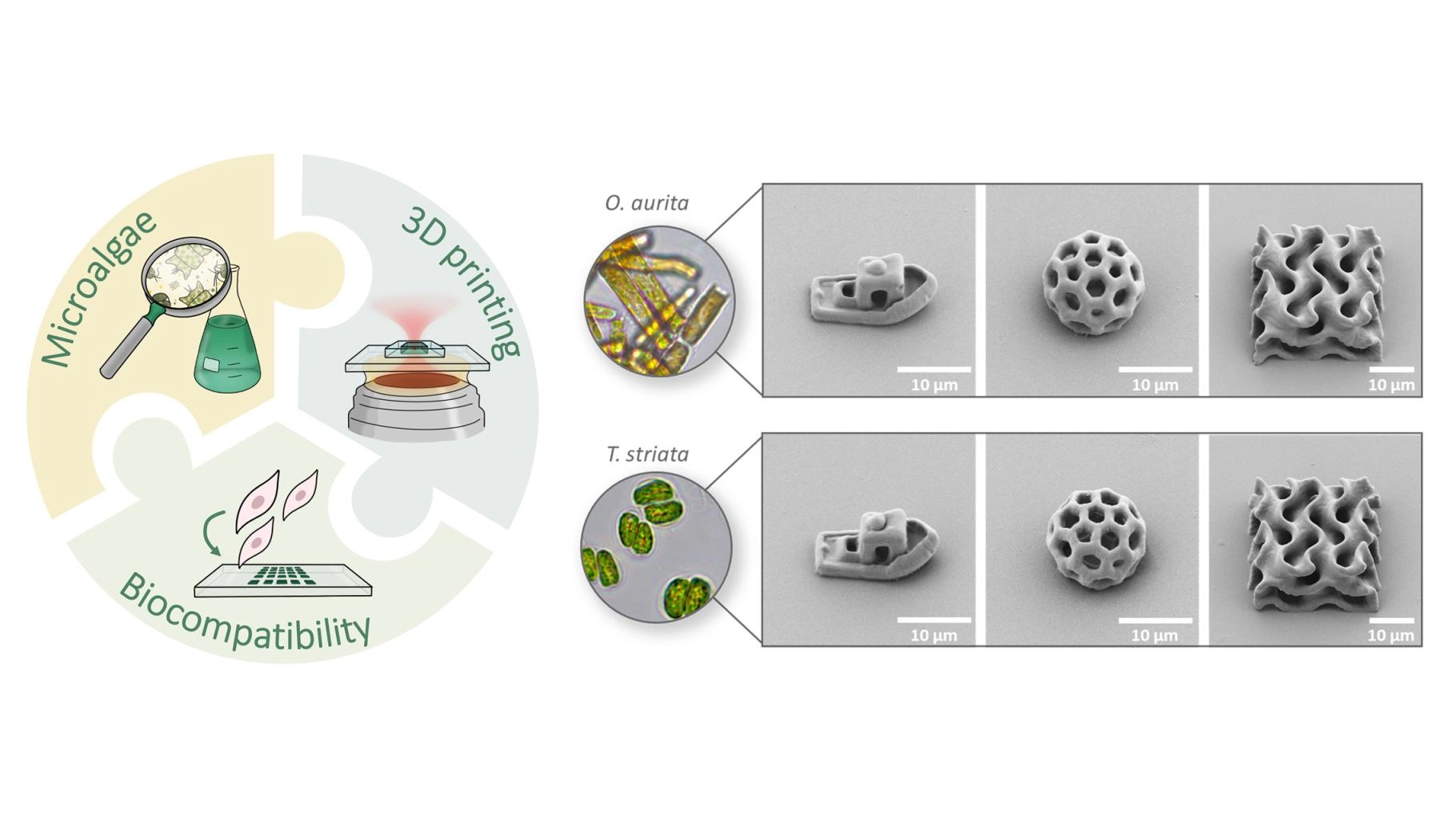
On August 14, 2024, a groundbreaking study emerged highlighting the use of microalgae, like Odontella aurita and Tetraselmis striata, in crafting sustainable materials for 3D laser printing applications. Spearheaded by Prof. Dr. Eva Blasco from the Institute for Molecular Systems Engineering and Advanced Materials (IMSEAM) at Heidelberg University, the research focuses on pioneering bioinks that are derived from these microalgae. The bioinks have proven effective for the precise creation of complex, biocompatible 3D microstructures, which may be critical in the production of medical implants and scaffolds necessary for 3D cell cultures.
Known for its finesse in fabricating detailed micro- and nanoscale structures, two-photon 3D laser printing has traditionally depended on petrochemical-based polymers. While functional, these materials contribute to environmental issues like fossil fuel consumption, greenhouse gas emissions, and toxicity.
In contrast, microalgae are a promising eco-friendly material source due to their quick growth, ability to fix CO2 during growth, and natural biocompatibility. Until recently, the potential of microalgae in light-based 3D printing has not been fully tapped.
Prof. Blasco’s team, situated at the crossroads of macromolecular chemistry, materials science, and 3D nanofabrication, has innovated by sourcing biocompatible materials for high-definition 3D laser printing from microalgae. They concentrated on two species, Odontella aurita and Tetraselmis striata, noted for their rich triglyceride content. These triglycerides were isolated and chemically modified with acrylates for swift solidification under light exposure. The naturally occurring green pigments in the algae acted as organic photoinitiators, facilitating the necessary chemical transformations to shape the ink into solid three-dimensional forms.
This advancement notably removes the need for harmful additives that are typical in traditional printing inks. “By doing this, we steer clear of hazardous substances like the photoinitiators in usual inks,” stated Clara Vazquez-Martel, the lead author of the study and a PhD candidate in Prof. Blasco’s research group.
Employing this algae-based ink, the researchers adeptly crafted various three-dimensional microstructures which demonstrate complex geometries, including suspended structures and internal voids. They subsequently assessed these structures for cellular compatibility through experimental cell cultures. The observations were remarkable, exhibiting almost complete cell survival on these 3D microscaffolds after a day.
“Our findings herald new prospects not only in environmentally responsible 3D printing techniques using light but also in applications relevant to life sciences, ranging from three-dimensional cellular cultures to biocompatible implants,” Prof. Blasco highlighted, reflecting on the broader impact of this research.
The study was documented in Advanced Materials and can be accessed here.
Through a joint effort with Wetzel Wind Energy Services and Stratasys Direct Inc., Sandia National Laboratories has developed a new model of turbine blade tip that could… read more »
In collaboration with Lennar, ICON is nearing the completion of a development consisting of 100 3D-printed houses in Texas, initiated in November 2022. The project… read more »
As a major enterprise in the field of additive manufacturing, SPEE3D has embarked on a strategic alliance with RusselSmith, a top provider of integrated energy solutions in West… read more »
After exploring 3D-printed footwear for its Spring/Summer 2024 line-up, Rains has introduced a new and… read more »
Tucker Induction Systems, based in Shelby Township, Michigan, has established a strategic partnership with Nikon SLM Solutions to boost its copper Additive Manufacturing capabilities… read more »
At the University of Virginia School of Engineering and Applied Science, engineers are developing the application of cellulose nanofibrils (CNF) to enhance 3D-printed… read more »
The Los Alamos National Laboratory (LANL) has released Fierro, a novel open-source software aimed at enhancing the safety and efficiency of manufactured parts by… read more »
Engineers at the University of Bath have developed a method using 3D-printed ceramic-infused lattices to remove harmful ‘forever chemicals’ from water. This innovative… read more
Aurora Labs and Innovaero have signed a Memorandum of Understanding (MoU) to integrate Aurora Labs’ 3D-printed metal components and micro gas turbines into… read more
ASTM International’s Additive Manufacturing Center of Excellence (AM CoE), along with various industry partners, has announced the launch of the Additive Manufacturing Certification… read more