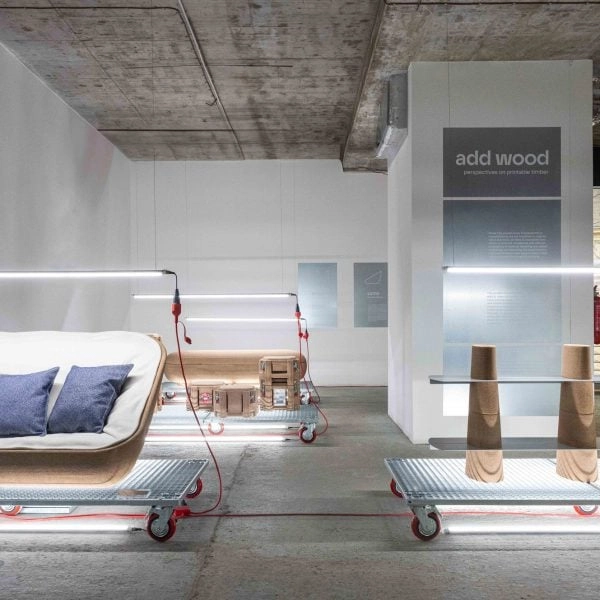
A recent exhibition titled "Add Wood" showcased innovative designs that leverage the sustainable potential of 3D-printed wood. Featured at Designblok 2024 in Prague, the exhibition highlighted the work of four designers—Esmée Willemsen, Janek Beau, Friedrich Gerlach, and Julia Huhnholz—who utilized a new material called EconitWood.
Developed by Additive Tectonics, EconitWood is crafted by mixing leftover wood from sawmills with a natural, eco-friendly binding agent. This method allows the material to be extruded through 3D printing, enabling the creation of complex and customized shapes without waste.
Willemsen’s design, a coffin named Finalform.stl, reflects the made-to-order nature of 3D printing. She envisions creating coffins tailored to specific bodies, eliminating non-biodegradable materials often seen in traditional coffins, such as metal grips. This approach not only minimizes environmental impact but also optimizes the coffin’s ability to decompose in various soil conditions.
Gerlach’s contribution, the Lumo sofa, features an EconitWood shell designed for efficient production. By taking advantage of the printer’s capacity to stack components, Gerlach maximizes printing space, demonstrating that large-scale furniture can be produced effectively. His design is fully disassemblable and biodegradable, with components made from natural materials.
Huhnholz crafted the Offset shelving unit, utilizing conical posts that can be nested together for efficient printing. This sculptural design relies on precise geometric interlocking to assemble the shelves without adhesive. Meanwhile, Beau’s Sandbox stool exemplifies modular functionality, allowing multiple units to stack for versatility, optimized for efficient shipping.
The exhibition "Add Wood: Perspectives on Printable Timber" not only won the Best Designer Presentation award at Designblok but also embodied a collective effort by the designers to explore the boundaries of sustainable design. Their innovative projects serve as a testament to the vast potential of 3D-printed materials in shaping a more environmentally friendly future.
For more details on the projects and the event, visit Designblok.