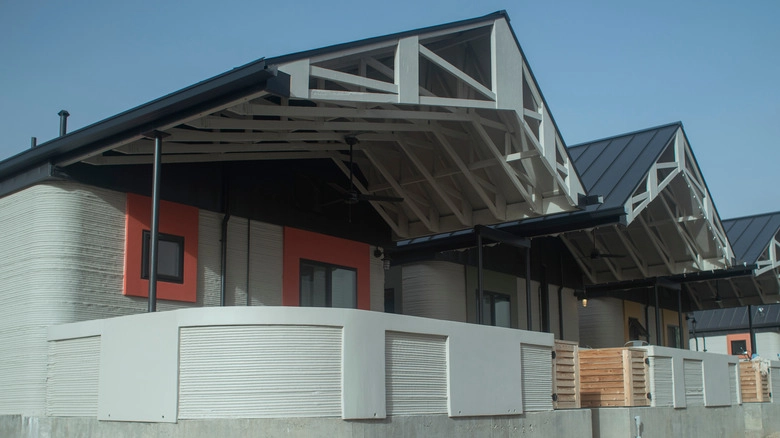
The future of housing is being revolutionized by 3D printing technology, which allows for complete buildings to be constructed using modern robotics. Though the concept originated in the 1980s, recent advancements have accelerated the process, allowing homes to be built in days—sometimes even under 24 hours. This innovative approach has gained traction among various companies aiming to address global housing crises through sustainable, efficient designs.
One notable project reflecting the potential of 3D printing in construction is located in Austin, Texas, where the first 3D printed home in the U.S., named "Chicon House," was unveiled in March 2018. Created by a collaboration between Icon, a startup specializing in 3D robotics, and the nonprofit New Story, this 350-square-foot prototype aims to provide affordable housing for the homeless. The construction took just 47 hours, resulting in a stylish two-bedroom home with modern amenities.
In early 2020, the largest 3D-printed home at the time was revealed in Calverton, New York. This impressive 1,900-square-foot structure by SQ4D cost nearly $6,000 in materials and took just 48 hours to print over eight days. The goal is to create more homes in similar designs for sale in nearby neighborhoods.
Additionally, SQ4D also introduced the first certified 3D printed home for sale in the U.S., a 1,400-square-foot residence designed in the Craftsman style and listed on Multiple Listing Services (MLS). This proved that 3D printed homes could meet traditional real estate standards.
Furthermore, sustainable building practices are at the forefront of 3D construction initiatives. One such example is Mighty Buildings’ "The Mighty Quatro" in California, a modern prefab home valued under one million dollars, featuring advanced materials and energy-saving capabilities.
In a unique venture, Coachella Valley aims to establish the world’s first neighborhood of self-sustainable 3D printed homes. These properties not only offer modern living spaces but are also designed using eco-friendly materials and methods to combat the housing crisis in California.
Across Europe, various countries are making strides in 3D construction, including Belgium’s first home printed in one piece and France’s Yhnova—a family home designed with warmth and energy efficiency in mind.
In Italy, the "Gaia" home showcases innovative sustainable building using natural materials, emphasizing the potential for 3D printed homes to support local agriculture.
Other groundbreaking projects include the self-sustaining home in Ukraine that operates entirely off-grid and a floating 3D printed houseboat in the Czech Republic.
In Ontario, Canada, a project for six affordable 3D printed family homes is underway, demonstrating the widespread appeal of this technology in global housing solutions.
These examples illustrate how 3D printed homes can tackle the current housing crises with intriguing designs, sustainable materials, and quick construction times, marking a significant shift in the architectural landscape.