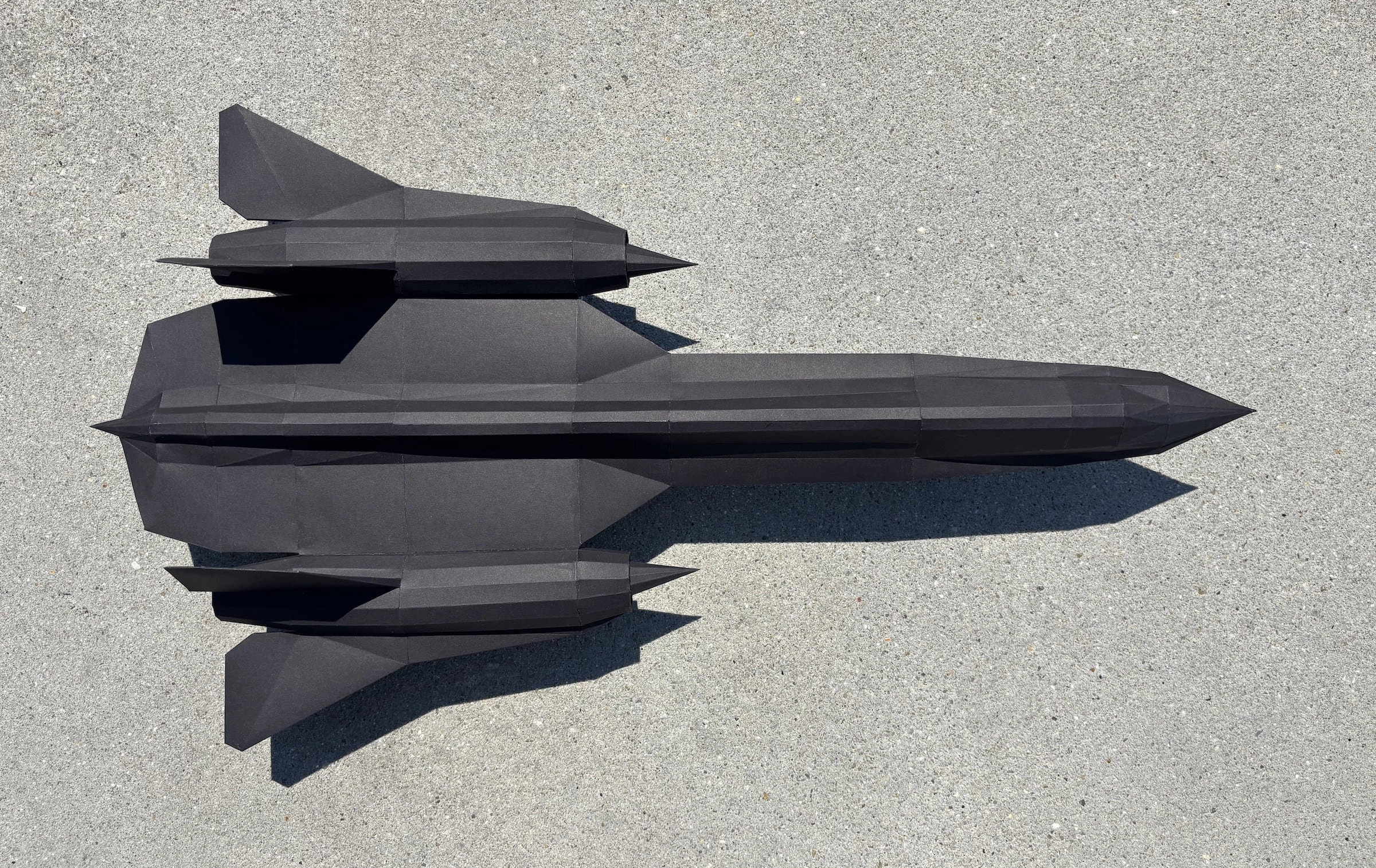
Although 3D printing has become the go-to method for creating physical models, there’s a traditional and accessible alternative: paper modeling. This technique involves designing templates printed on paper, which can be cut out and assembled with basic glue, making it an easier introduction for beginners or a fun project for kids.
Arvin Poddar explores this method in detail, demonstrating how to create paper models from regular 3D meshes. Using any STL file from popular 3D model sites like Printables or Thingiverse is fair game, although he points out that reducing the complexity of mesh faces can be more challenging than modeling from scratch. In his example, he constructed a detailed model of the SR-71 aircraft using Blender, consisting of 732 triangles, emphasizing that the degree of detail is influenced by the paper type and the assembler’s skill.
The process includes taking your 3D model and converting it into a 2D shape through unfolding, a task facilitated by software like Pepakura Designer or Blender’s ‘Paper Model’ exporter. The only tools necessary for this creative endeavor are a color printer, paper, scissors, and glue. While advanced tools can enhance the project, the low barrier for entry makes it accessible to many.
Although these paper models are generally not intended for practical use, they offer valuable opportunities for artistic display and can spark interest in 3D modeling among younger audiences.
For further information, you can check out Pepakura Designer and the Paper Model exporter for Blender.