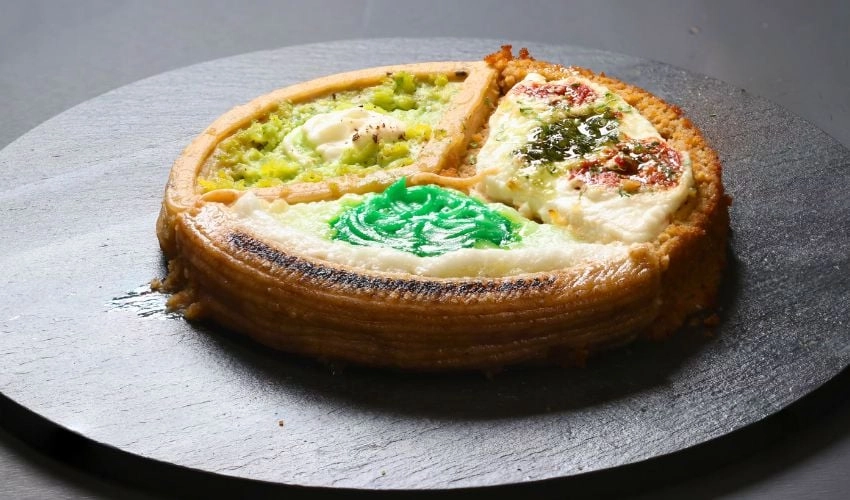
Imagine enjoying a three-course meal entirely created through 3D printing and laser cooking. This concept became a reality at Columbia University, where researchers developed a complete meal that featured a quiche-inspired tart, cauliflower pizza, and key lime pie, achieving textures comparable to traditional cooking methods. While 3D food printing has seen considerable advancements, replicating the authentic textures of food has remained challenging due to the limitations of traditional cooking methods in precision and heat application.
Closing the Texture Gap in 3D Food Printing
Led by Jonathan Blutinger during his PhD in mechanical engineering at Columbia University, the project unfolded over six years. Working under the guidance of Professor Hod Lipson, the team sought to control cooking processes with the same digital precision employed in additive manufacturing. Collaboration across various disciplines within Columbia enriched the research.
The innovation at the heart of the project was the integration of laser cooking directly into the 3D printing process. Instead of printing the food and then transferring it to an oven, localized laser heating was applied during the fabrication phase itself, allowing for selective cooking of specific regions while maintaining the overall structure.
From Ingredients to a Fully Cooked Meal
To create the demonstration meal, the team utilized 14 ingredients from local grocery stores, preparing them using standard food-processing tools before 3D printing. By manipulating laser exposure during the printing process, they successfully crafted textures that mimicked those of conventionally cooked foods.
This work builds upon previous food printing research conducted at Columbia’s Creative Machines Lab. In a former study, the team demonstrated a seven-ingredient dessert made from edible inks, focusing on multi-material food assembly, which prompted considerations of how future cooking devices could merge 3D printing with software-driven heating.
The project’s core team consisted of Blutinger, Evan Lloyd Omo, and Pol Bernat, supported by a collaboration of around 30 to 40 engineers and students. Their findings were published in the Journal of Food Engineering in September, marking a significant advancement in the exploration of digitally controlled cooking.
Beyond the novelty, Blutinger believes this technology can enhance food preparation transparency and help consumers make more informed choices regarding their meals. Future research aims to compare the nutritional value of laser-cooked foods against those prepared by traditional methods.
Although still a research prototype, this work illustrates how digitally controlled cooking may address the inherent limitations of 3D food printing, opening doors to personalized nutrition and software-driven food production.
Would you be willing to try a meal created through 3D printing and laser cooking?