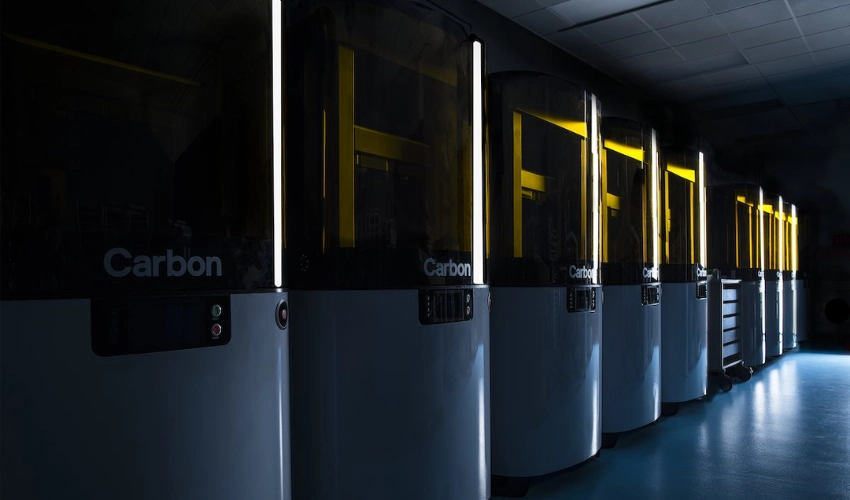
At LMT Lab Day Chicago 2025, Carbon unveiled a groundbreaking new resin called FP3D, specifically designed for flexible, removable partial dentures. This new material signifies a potential turning point for digital dentistry, being the first to utilize Carbon’s innovative dual-cure chemistry, which has previously revolutionized other industries like footwear, cycling, and sports equipment.
Unlike traditional single-cure dental resins, FP3D features a secondary heat-activated curing step that enhances the strength of the printed parts. This dual-cure process allows for improved print accuracy and durability, which dental professionals require for devices that endure daily use. The result is an “engineering-grade” performance that meets the rigorous standards of the dental field.
Carbon has proven its materials’ effectiveness in demanding applications. The same dual-cure technology used for FP3D has been instrumental in creating Riddell’s 3D printed football helmet liners, advanced athletic shoe midsoles, and comfortable yet high-performance bike saddles. This transition into the dental field aligns with the growing trend among dental labs adopting digital workflows.
In conjunction with the launch of FP3D, Carbon also announced updates to its automation suite. These advancements include user-friendly print preparation software and a new polishing system compatible with their M3 printers, aimed at enhancing laboratory operations by reducing manual workloads and increasing part consistency.
Although FP3D is currently under FDA review and not yet available in the United States, its introduction showcases how 3D printing technology and advanced material science are reshaping the future of dental manufacturing. By integrating automation with pioneering materials, Carbon is helping to establish digital dentistry as a faster, more reliable alternative to traditional methods.
For further details, you can explore Carbon’s advancements in 3D printing here.