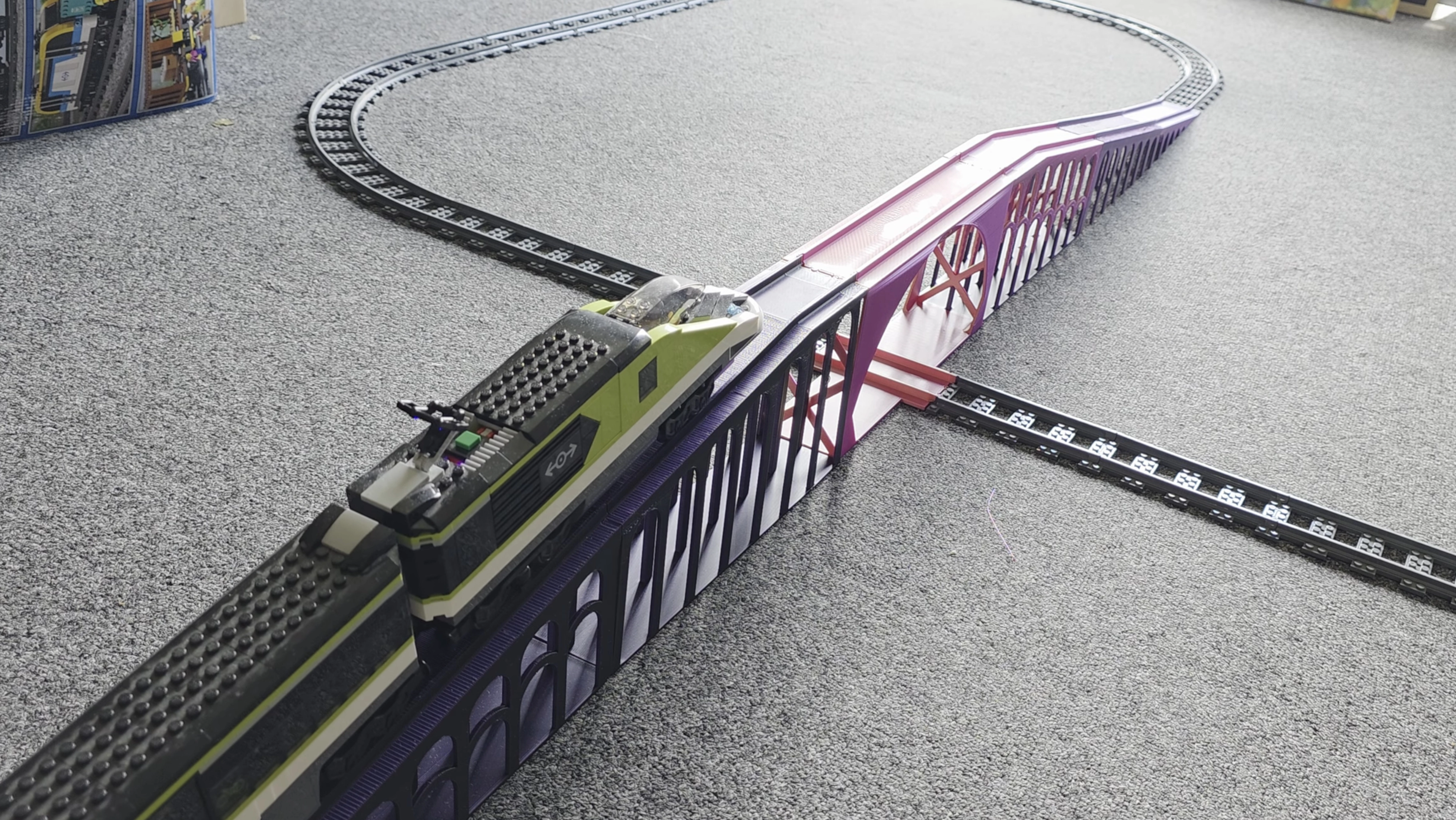
Lego train sets have captivated enthusiasts for decades, offering an enchanting combination of building blocks, motors, and tracks. However, a notable absence from their lineup has been a dedicated bridge for these train systems. While aftermarket solutions and creative community hacks exist, they often come with various limitations, creating a gap that one user decided to fill by way of 3D printing.
The Challenge of Building Bridges
Building Lego rail bridges presents unique challenges. Traditional Lego trains struggle with inclines due to their limited pulling power and grip, making it difficult to create a functional bridge. Most existing designs rely on standard track pieces elevated with supports, which can make it tricky to run trains below. After many failed attempts using various materials for bridge building, this user felt that designing and 3D printing custom pieces could provide a better solution.
Research and Design Process
The first step in creating this bridge was replicating the Lego track geometry. This required precise measurements—specifically, the train would need to climb a grade of 10 degrees, a manageable slope for the Lego locomotives. To achieve this, the design comprised multiple pieces, including ramps and a central flat section allowing trains to run underneath.
Focusing on aesthetics and the practicality of 3D printing, the designer aimed for a structure that needed no supports, using arches to ensure stability during printing. The use of PLA filament added color, and the individual bridge pieces ultimately measured nearly two meters long, creating an impressive structure.
Testing the Bridge Design
To evaluate the finished design, the user set up a test railway at home, quickly discovering issues such as some locomotives colliding with the track coupler. Additionally, different carriages had varying degrees of compatibility with the bridge, leading to derailments when combined with certain trains.
However, with careful operation of compatible locomotives along a suitably designed layout, the bridge performed well, allowing trains to navigate through an elevated section without significant problems, proving the concept’s viability.
Room for Improvement
While the initial design was functional, it highlighted areas for enhancement. A reduced grade could provide better performance across a wider range of trains, and adjustments to the transitions on and off the slope would further optimize usability.
For those interested in creating their own version of this bridge, the design files are available online, providing an exciting opportunity to experiment with Lego railways and 3D printing.
This experience underscores the creativity and innovation possible with 3D printing, as it can easily address the unique challenges posed by toys and hobbies, inviting enthusiasts to explore new frontiers of customization.