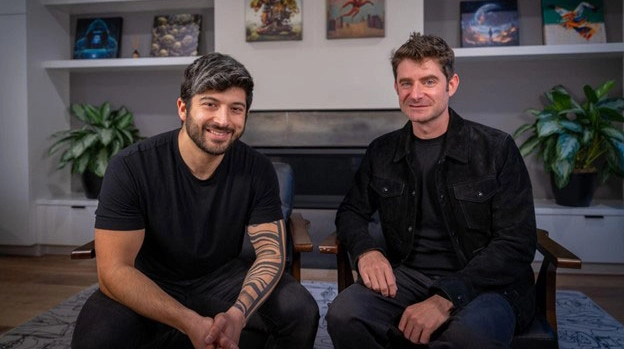
Backflip Inc., a startup focused on expediting the creation of 3D models for engineers, has recently secured $30 million in funding. This Series A round was led by NEA and Andreessen Horowitz, with participation from notable angel investors including Microsoft CTO Kevin Scott, Android founder Rich Miner, and Ashish Vaswani, a co-inventor of the Transformer neural network architecture. Previously, Backflip raised an undisclosed seed round.
Founded in 2022 by David Benhaim and Greg Mark, who also co-founded the 3D printer company Markforged, Backflip aims to streamline the labor-intensive process involved in creating 3D blueprints. Traditionally, engineers utilize computer-aided design (CAD) software to create these models, a process that can take days, particularly for complex objects.
The complexity arises from the fundamental structure of a 3D model, which is a point cloud representing an object’s outline. Engineers fill these gaps with geometric shapes within their CAD tools, but this can result in empty spaces during manufacturing, leading to potential flaws in the printed object. Some types of models, like those requiring water-tight designs, add further difficulty.
To mitigate these hurdles, Backflip has developed an AI platform that can automatically generate 3D models from user-provided text descriptions, photos, or sketches. The proprietary AI utilizes a novel neural representation specifically tailored for 3D modeling, enabling superior resolution and efficiency. According to Benhaim, this technology offers 60 times more efficient training, 10 times faster inference, and up to 100 times the spatial resolution compared to existing methods.
Backflip trained its AI with a dataset comprising approximately 10 million 3D part blueprints, some of which were synthetically generated. The platform reduces modeling time from days to mere minutes, allowing its blueprints to be compatible with various manufacturing materials, including metal, carbon fiber, and plastic.
For more details, refer to the original announcement here and coverage from TechCrunch.