In recent years, advancements in additive manufacturing technology have made substantial impacts on the healthcare sector, particularly in the development and production of prostheses, implants, and medical devices. Metal 3D printing is at the forefront of this revolution, enabling the creation of highly customizable medical solutions. Utilizing biocompatible materials like titanium and cobalt alloys not only guarantees the safety and durability of medical devices but also promotes sustainability through reduced material waste and improved manufacturing efficiency.
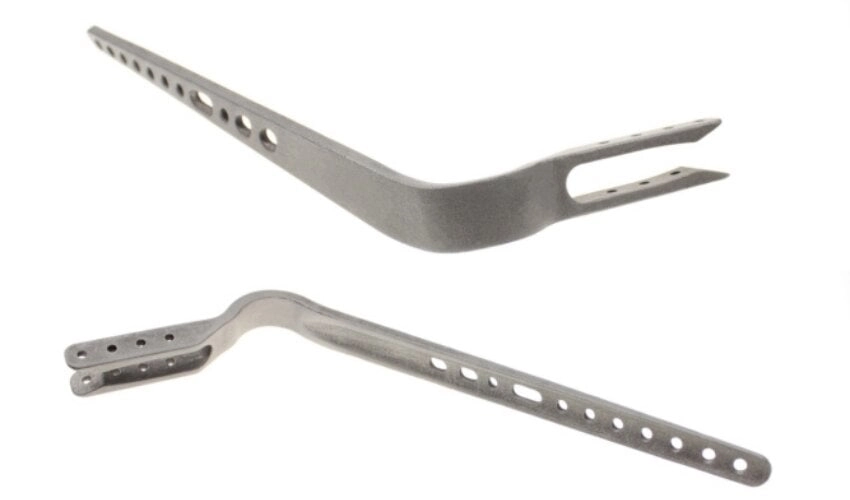
Additive manufacturing allows for the production of tailor-made implants such as plates and screws that fit the unique anatomical features of each patient. This integration of 3D scanning, imaging techniques, and advanced software with 3D printing technology has proven to enhance patient outcomes, even accelerating healing processes. To illustrate these benefits, a case study regarding titanium shoulder arthrodesis plates produced via metal additive manufacturing highlights the transformative potential of this technology.
Traditional Versus Additive Manufacturing
Traditionally, manufacturing shoulder arthrodesis plates poses significant challenges due to the time-consuming and resource-intensive process required to create specialized tools and the complex geometries involved. Common issues include difficulties in machining and the precision of bending operations, which often fail to meet the strict tolerances necessary for medical devices.
Eplus3D showcased a solution using L-PBF (Laser Powder Bed Fusion) technology to create a functional prototype of a shoulder prosthesis rapidly and at reduced costs. The EP-M260 3D printer, known for its versatility in processing various high-performance materials, including titanium, played a critical role in this innovation. For the production of the shoulder plates, VT6 titanium alloy, certified for medical use, was selected, and the printing of the components, measuring 25 cm in length at a layer height of 30 µm, required about 12 hours.
After printing, each component underwent a heat treatment process to eliminate any residual stresses before hand tools were used to remove print supports and sandblast the surface. To ensure dimensional accuracy, the originally intended tapered threads were excluded from the 3D model. Instead, simple holes were drilled into the cast model, allowing threads to be cut with CNC or manual machining.
The result was a precisely crafted shoulder arthrodesis plate that was customized for each patient’s anatomical needs. This method not only reduced production time and resource consumption compared to traditional manufacturing methods but also achieved superior accuracy, thereby facilitating quicker patient recovery.
The success of this application signifies how metal 3D printing is reshaping the medical field. With ongoing advancements in additive manufacturing techniques and the introduction of increasingly sophisticated biocompatible materials, the landscape of patient care is being redefined. The future of medicine, aided by 3D printing technology, promises richer possibilities for treatment and recovery.