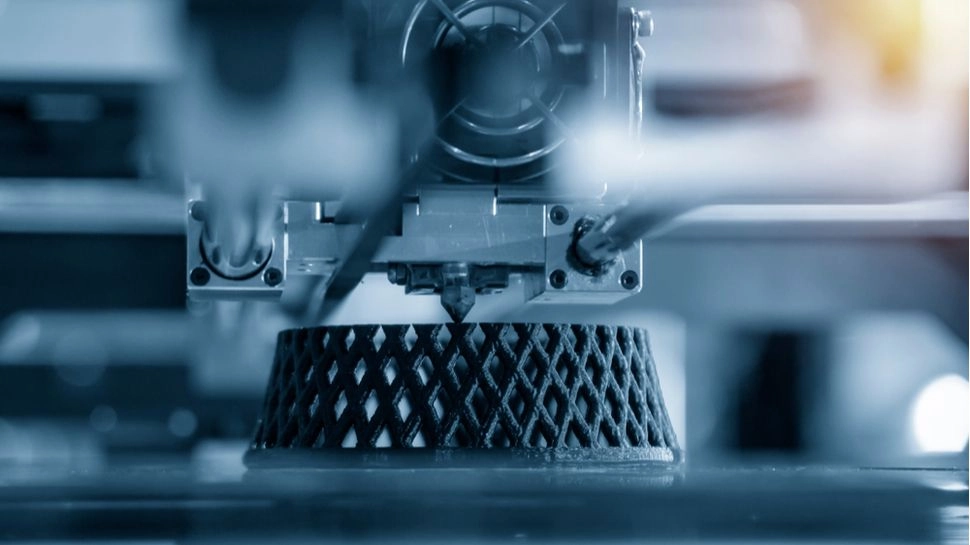
When it comes to 3D printing, the focus has often been on plastics, leaving metal printing as a more complex challenge due to the extreme temperatures required and the potential for significant material defects. However, a significant breakthrough by researchers at Hiroshima University has now introduced a viable method for 3D printing tungsten carbide cobalt without the need to fully melt the material.
This innovative process employs a combination of a laser and heated wire to gently soften the tungsten carbide, allowing layers to bond together without compromising the overall structure. By introducing a thin layer of nickel alloy between the bonded layers, the integrity of the connection is enhanced, effectively minimizing defects that have previously obstructed metal additive manufacturing.
The results of this technique are promising, with the final printed material achieving a hardness exceeding 1400HV. This hardness level rivals that of materials like sapphire and diamond, marking a considerable achievement in the realm of 3D printed metals. Tungsten carbide, a crucial component in various cutting and construction tools, is renowned for being one of the hardest engineering materials available.
The implications of this technology are profound. Traditional methods of creating tungsten carbide tools typically involve subtractive manufacturing processes that produce significant waste. The ability to 3D print industrial-grade carbides can significantly reduce material waste and allow for components to be fabricated closer to their final specifications.
Despite the progress, challenges remain. The printing process still encounters issues with cracking and struggles with producing more complex shapes. Researchers recognize the novel application of softening metal rather than melting it but emphasize that further refinements are essential to fully harness this technology. Ongoing advancements will be necessary to improve reliability, scalability, and practical application beyond laboratory settings.
The development of this technique, while promising, will likely take time before we see tungsten parts being printed in everyday scenarios. Metal printing remains a slower, more costly, and less controlled process compared to its plastic counterparts. However, as the technique matures, it holds significant potential in the field of additive manufacturing.
For detailed information about this breakthrough, visit Hiroshima University and read more through Tom’s Hardware.