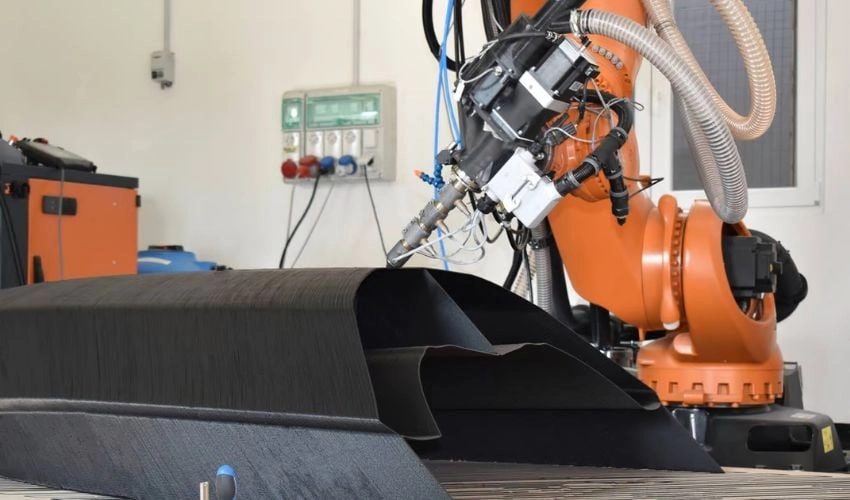
Robotic arms are increasingly being integrated into 3D printing processes, bringing with them several advantages that enhance manufacturing capabilities. These programmable, motorized tools closely mimic the dexterity of human arms, making them highly effective for repetitive tasks in industrial settings. This article highlights eight compelling reasons to adopt robotic arm 3D printing.
1. Increased Flexibility and Multiplanar Toolpaths
Unlike traditional 3D printers that typically operate on a cartesian plane, many robotic arms can follow multiplanar toolpaths. This means they can print in multiple directions, providing greater design freedom and the ability to create complex geometries.
2. Reduced Need for Support Structures
Robotic arm 3D printing allows for significant overhang capabilities due to its multiplanar nature. This reduces the dependency on support structures, which leads to less material waste and less post-processing work required.
3. Larger Build Volume
Robotic arms are versatile; they do not need to be confined to a build plate or enclosure. They can vary in size from desktop models to larger systems capable of constructing entire buildings. Additionally, they can be mounted on tracks, increasing their reach and the scope of projects they can handle.
4. Change Heads for Multiple Functions
These robotic arms aren’t limited to a single function. They can swap out heads for different tasks, allowing the integration of various additive manufacturing technologies alongside traditional subtractive methods like CNC machining. This flexibility optimizes space and minimizes the need for multiple separate machines.
5. Adapt Existing Robotic Arms
If you own a robotic arm, you might be able to adapt it for 3D printing. Companies like Adaxis offer software that can convert existing robotic arms into large-scale 3D printers, making it a cost-effective way to reintroduce underutilized equipment into your workflow.
6. Comprehensive, Single-Cell Solutions
Some robotic arm systems are sold as compact, fully integrated units. An example is Meltio’s Robot Cell, designed specifically for metal 3D printing. Such complete systems streamline the printing process and enhance production efficiency.
7. Capable of Diverse Surfaces and Repairs
Robotic arms can print on various surfaces, making them ideal for repairing existing equipment instead of creating new parts. This repair capability is especially valuable for older machinery, where finding replacement parts can be challenging.
8. Suitable for Multiple Materials and Technologies
Robotic arm additive manufacturing can work with various materials, including metals, plastics, and concrete, expanding the range of possible applications. The compatibility with multiple additive manufacturing technologies, including extrusion and wire arc deposition, provides users with a flexible and dynamic manufacturing tool.
In conclusion, the capabilities of robotic arm 3D printing present a unique opportunity for businesses looking to innovate and optimize their manufacturing processes. Would you consider incorporating a robotic arm into your 3D printing strategy?