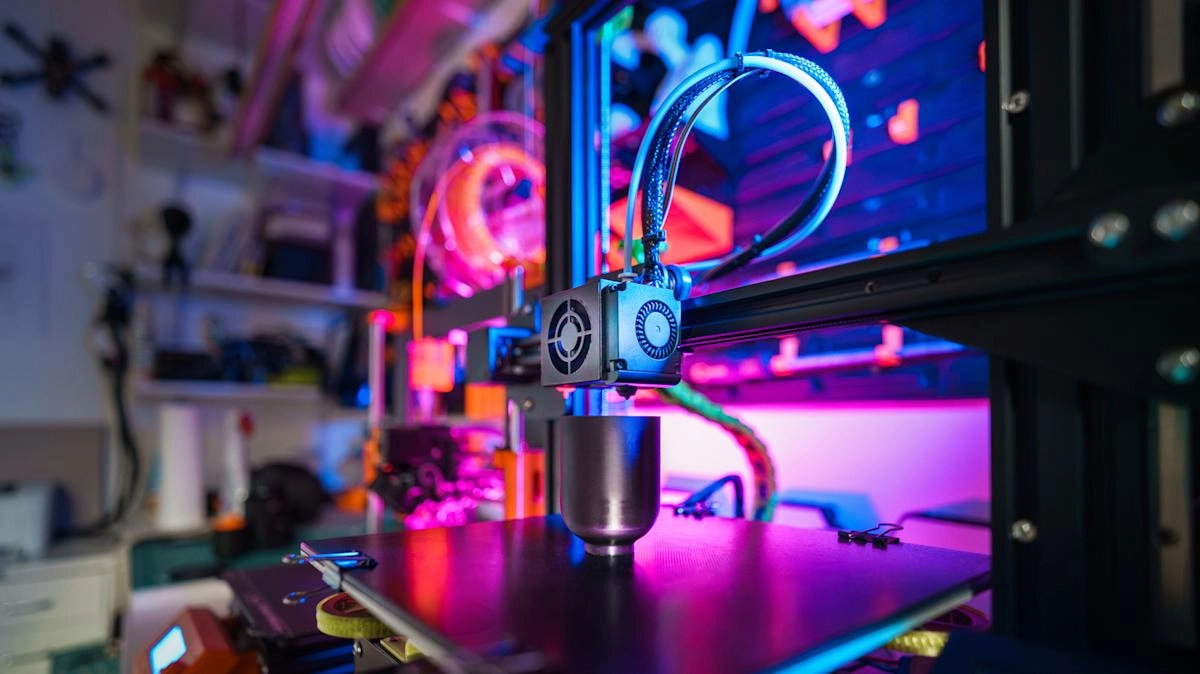
3D printing technology is transitioning from a novelty hobby to a serious home manufacturing solution. By 2026, we can expect significant advancements in professional-grade reliability and material variety, making complex fabrication more accessible. New features from affordable 3D printers will include built-in multi-color printing and advanced software that simplifies the process for users.
As the barriers to entry diminish, users will spend less time on technical adjustments and more time creating innovative projects. This shift promises enhanced throughput, part quality, and less troubleshooting, with a focus on software optimizations and user-friendly designs.
Innovations in UV Printing
2026 will see the rise of consumer-friendly UV printing technology, allowing for vibrant color finishes and complex textures on various hard surfaces. Unlike traditional methods, UV printing dries layers of ink instantly, enabling high-detail designs without the need for post-processing. This will significantly enhance customization options for 3D-printed objects.
Waste Reduction with Tool-Changing Systems
New 3D printers will feature improved capabilities for handling multiple colors and materials efficiently. Tool-changing systems will minimize filament waste typically generated during color transitions. Notable advancements, like the multi-nozzle systems from leading manufacturers, will allow for more economical printing, with less "purge waste" inherent in previous models.
New Materials for Enhanced Capabilities
Home 3D printing will expand beyond standard plastic to include advanced composites and metals. Innovative materials, such as glass-fiber reinforced filaments and lighter foaming options, will become more common. These materials will open new avenues for product development, including the introduction of techniques like Cold Metal Fusion, which marries plastic and metal in profitable ways.
Smarter Software to Reduce Failures
Expect major upgrades in slicing software, with smarter algorithms that optimize the printing process. This not only enhances precision but also reduces the likelihood of failed prints. Automation will become a key focus, freeing users from manual inputs and minimizing human error in the production process.
All-in-One Systems for Home Manufacturing
Integrating additive and subtractive manufacturing will become feasible, with machines capable of 3D printing, laser engraving, and CNC milling. Tools like the Makera Z1 will streamline these processes, enabling users to create finished products in one assembly. This convergence represents a significant advancement toward the vision of a "desktop factory" in home environments.
As 2026 approaches, we can anticipate that 3D printing will transition from an experimental hobby to a reliable production method, enabling creators to realize their projects with greater efficiency and creativity.